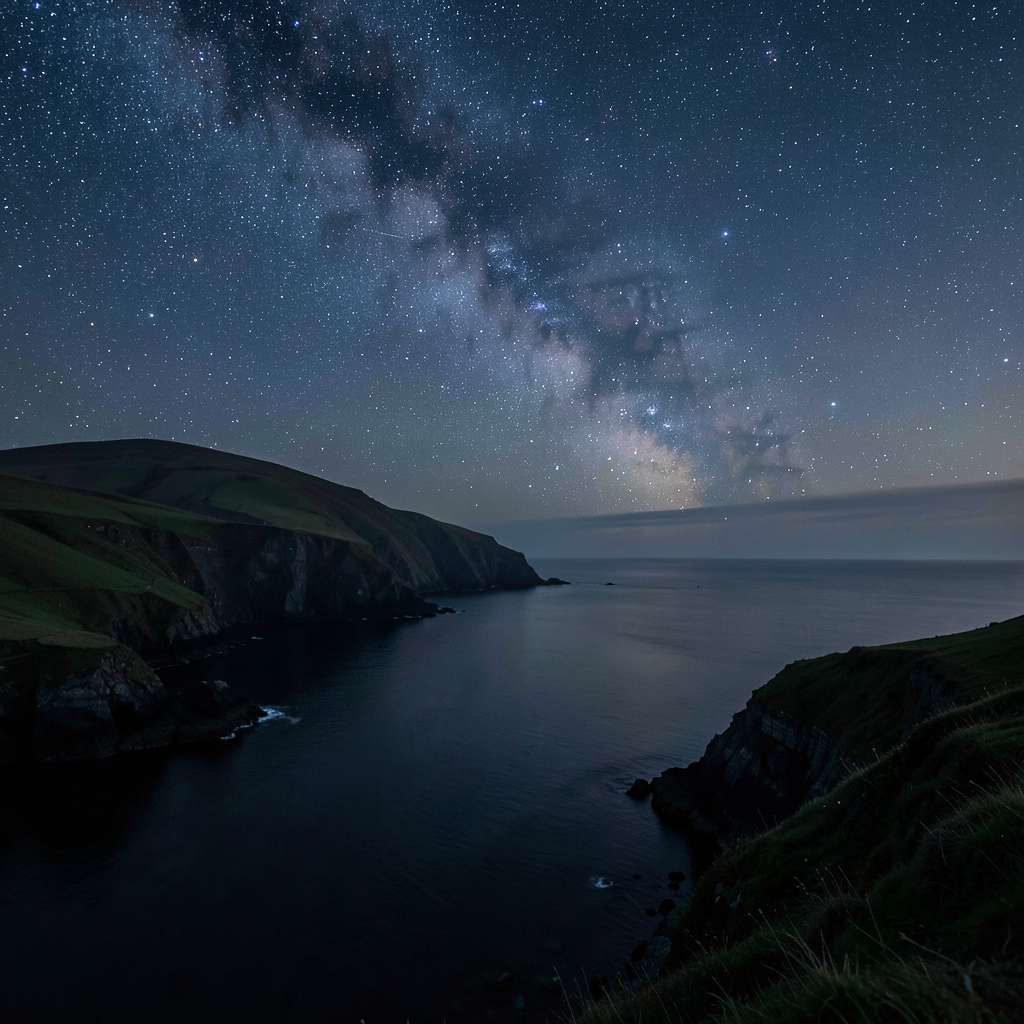

The AA has compiled a ranking of the premier stargazing destinations within the United Kingdom’s national parks, identifying the leading location within Wales.
The motoring organisation assessed each national park across several critical criteria that determine the quality of a stargazing experience.
These factors included levels of light pollution measured using the Bortle scale, precipitation levels, cloud coverage, and atmospheric conditions.
The assessment determined that New Forest National Park emerged as the foremost destination for celestial observation throughout the country.
The recent appearance of a partial solar eclipse, which drew considerable public attention skyward, has contributed to a significant surge in interest regarding stargazing activities.
Search engine data indicates that queries for local stargazing sites have doubled over the past twelve months, while related search terms have also shown notable increases.
With the transition to longer nighttime hours during the autumn season, opportunities for outdoor nocturnal experiences become more accessible without requiring specialised equipment.
Individuals can observe recognisable constellations and meteor events with unaided vision, provided atmospheric conditions remain favourable.
A spokesperson from the insurance provider noted that an increasing number of individuals may be inclined to embark on road journeys to appreciate Britain’s darker evenings.
Research conducted by the organisation demonstrates that achieving remarkable views of the night sky does not necessarily mandate travelling to the most isolated regions of the nation.
The country contains numerous excellent locations suitable for celestial observation, rendering such experiences widely accessible.
Wales maintained a respectable presence within the overall standings, securing two positions within the upper portion of the rankings.
Pembrokeshire Coast National Park achieved seventh position with a score of 68.41, while Bannau Brycheiniog National Park occupied the tenth spot with 43.20.
Eryri narrowly missed the upper echelons, settling at twelfth position with 33.41.
The investigation revealed that southern England has established itself as the country’s preeminent region for stargazing, with two of the three highest-placing national parks situated in that area.
New Forest National Park claimed the leading position, achieving an impressive score of 86.51 out of 100.
The area, characterised by freely roaming equine populations and extensive ancient woodland, combined reduced light pollution, fewer precipitation events, lower cloud instances, and favourable air quality to secure its first-place standing.
This combination renders it the nation’s premier location for escaping metropolitan illumination and appreciating celestial phenomena.
South Downs National Park, distinguished by its striking white chalk formations, followed closely with a score of 84.96, while the Broads, known for containing Britain’s largest protected wetland area, ranked third with 84.81.
These three locations represent the most favourable destinations for celestial observation, offering optimal conditions for clear nocturnal skies within the United Kingdom.
Within the top ten rankings, eight positions were occupied by English parks.
Dartmoor National Park claimed fourth position with a score of 73.42, North York Moors National Park secured fifth with 72.71, and Exmoor National Park took sixth place with 69.58.
Further down the standings, Northumberland National Park achieved eighth position with 52.79, while Peak District National Park completed England’s representation within the top ten, ranking ninth with 51.18.
Despite Scotland’s reputation for dark skies, the nation’s national parks achieved lower overall rankings due to factors including elevated rainfall and persistent cloud cover, which can impede optimal viewing conditions.
Cairngorms National Park attained eleventh position with 33.77, while Loch Lomond and The Trossachs National Park placed fifteenth with 15.16.
The representative further commented that as darkness extends earlier, autumn introduces altered driving conditions with increased nocturnal journeys and fluctuating weather patterns.
Many optimal viewing locations necessitate travel along rural routes that may be unfamiliar, constricted, and inadequately illuminated.
Individuals planning nocturnal excursions should ensure their travel arrangements receive equal consideration, including comfort with return journeys under diminished visibility.
Prior to departure, motorists are advised to inform contacts of their intended destination, verify weather and road surface conditions, equip themselves with thermal provisions, establish their route in advance, and confirm availability of safe parking facilities.
Allocating additional travel time, moderating velocity, and maintaining alertness can substantially improve safety, particularly on roads with restricted sightlines where wildlife activity increases.
Adequate preparation enables individuals to safely appreciate celestial displays while minimising potential complications during the return journey.