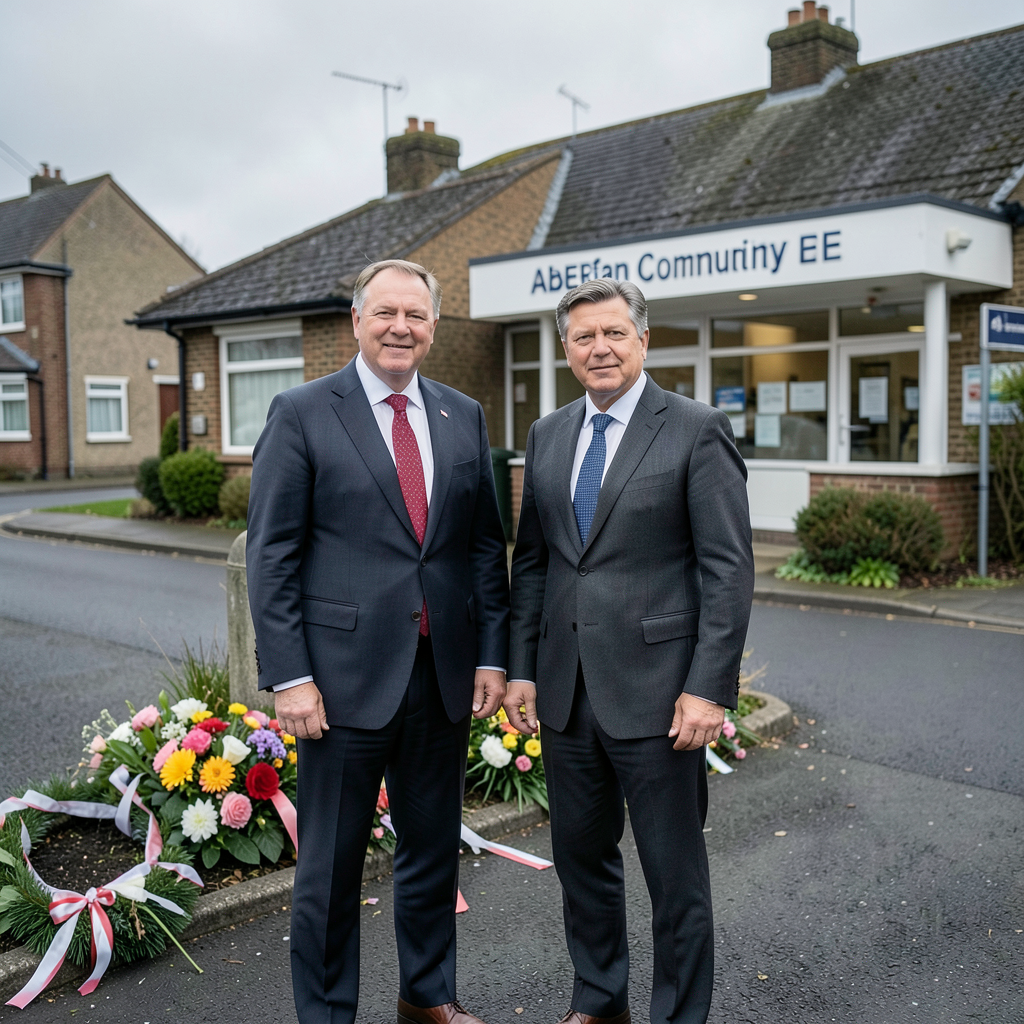

Andy Burnham, the Prime Minister, and Welsh Secretary Stephen Kinnock visited Aberfan Community Centre to mark the 60th anniversary of the Aberfan disaster.
The central issue facing Wales concerns whether Burnham will deliver improved funding after years of insufficient financial support.
The Prime Minister’s inaugural Budget has been shaped by multiple factors: increasing borrowing expenses resulting from the conflict in the Middle East initiated by President Trump, demands to boost defence expenditure which served as the trigger for Keir Starmer’s removal from office, commitments to decrease welfare expenditure, and assurances to generate economic expansion across all areas of England.
Significantly, the fairness agenda within the Budget has been presented as an effort to bridge the economic gap between northern and southern England, with the northern-based administration pledging growth throughout every English postcode.
However, this approach overlooks Wales’ argument for a more equitable distribution of rail infrastructure investment, National Health Service resources, and national wealth.
For many years, Wales has suffered from chronic underfunding.
The country receives just 1.5 percent of total United Kingdom rail investment despite accounting for 5 percent of the UK population.
Scotland, by contrast, receives its full 8 percent population allocation.
Additionally, if Wales were classified as an English region, residents would receive an additional £180 per person in NHS funding.
The Barnett formula further disadvantages Wales relative to Scotland, even though Scottish average earnings exceed those in Wales.
Furthermore, revenues from the Crown Estate in Scotland remain available for Scottish investment, whereas Wales’ £210 million contribution is collected by the Treasury for spending elsewhere.
There is no indication that Andy Burnham plans to address these imbalances, and no prominent group of Welsh Labour Members of Parliament is pressing him to do so.
The situation may deteriorate further.
Burnham’s strategy for redistributing wealth from London and the South East to northern England does not extend to Wales.
The proposed reforms to local authority funding and property taxation brought forward by Angela Rayner will transfer resources between English regions, moving funds from wealthier areas to those with greater need.
Rather than implementing a comprehensive reassessment of residential properties, the government intends to modify its funding allocation mechanism in England alongside specific property levies.
This would shift the tax burden onto owners of higher-value properties, with the financial benefits remaining within England.
The redistribution of UK wealth ought to encompass Wales.
In Wales, the median household wealth stands at £119,800, approximately half the £235,900 recorded for the South East and considerably below levels found in certain London areas where property values are elevated.
Furthermore, council tax charges for a property in Swansea amount to two or three times the rate applied to a comparable property in Westminster.
A genuinely progressive taxation system for the United Kingdom should address both income and wealth, given that the wealthiest 1 percent hold 20 percent of total wealth while the bottom half possesses only 9 percent.
The proposed approach, which the Telegraph has described as a covert wealth tax, would result in increased council tax demands in affluent London boroughs such as Westminster and Wandsworth to enable greater funding allocations to less prosperous English local authorities.
Such deliberate redistribution of wealth should apply across the entire United Kingdom rather than being concealed by the Ministry of Housing, Communities and Local Government under the pretext that council tax falls within devolved jurisdiction.
The Budget discussions will centre on the magnitude and pace of defence spending increases and welfare expenditure reductions, alongside whether alternative approaches to welfare reform and economic growth beyond those proposed by Burnham might prove more equitable.
The significant question for Welsh voters concerns whether their Labour representatives, particularly those selected for constituencies despite having no prior connection to Wales, will advocate for improved treatment for Wales and fulfill their obligation to serve their electorate, or whether they will offer silent acquiescence to their new party leader.
Winston Churchill observed that a Member of Parliament’s obligations rank first to the nation, second to constituents, and third to their political party.
The coming period will reveal whether Welsh Labour MPs ensure that the promise of growth throughout every postcode extends equally across the border into Wales.