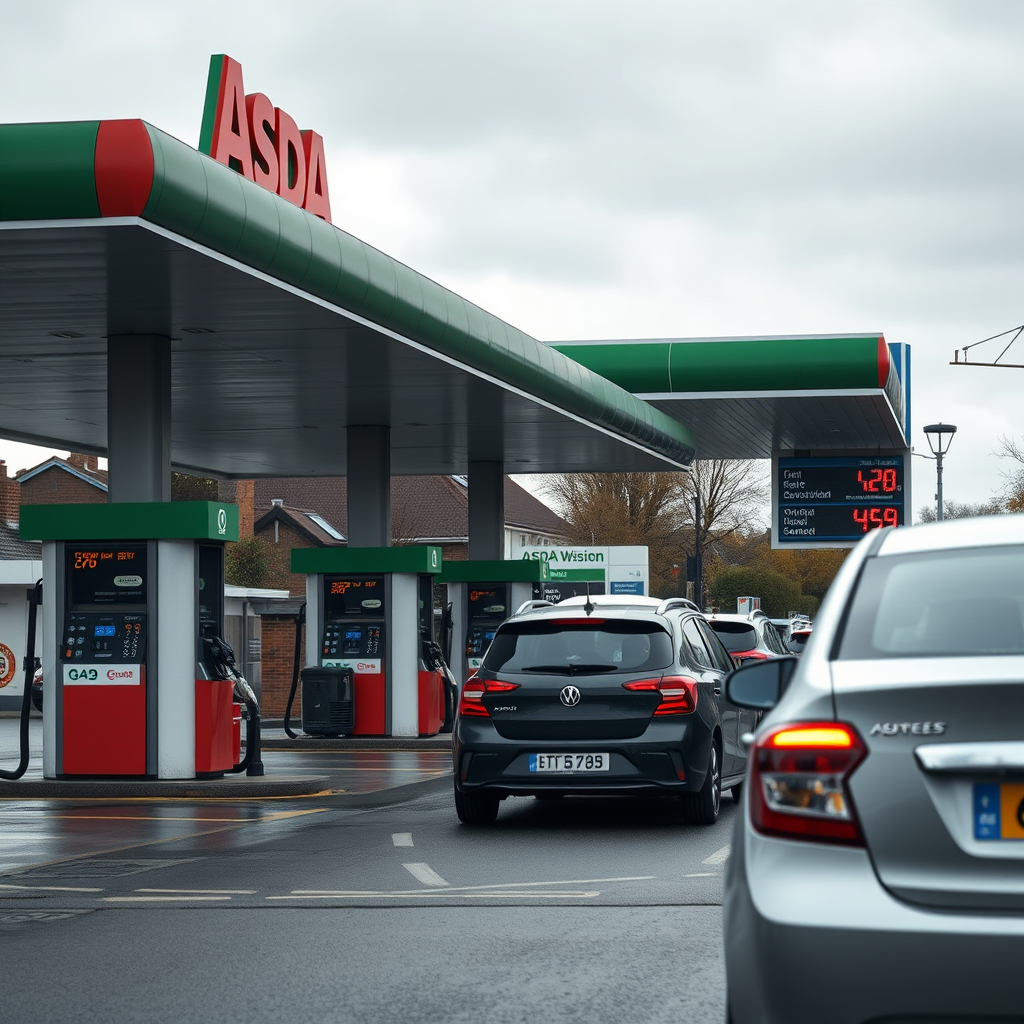

The head of Asda has cautioned that certain filling stations are facing brief shortages as constrained supplies connected to the Middle East conflict start to take effect.
The country’s second-biggest fuel vendor also rejected accusations that its petrol stations are profiteering from the recent price hikes.
Petrol and diesel costs have risen dramatically since late February, following the conflict between Iran and US-Israeli forces that disrupted oil production and supply from the area.
Average unleaded costs have surged by over 14p per litre during that time, hitting 147.19p, according to RAC data released earlier this week.
Allan Leighton, executive chairman of Asda, stated the retailer has experienced strong demand from motorists amid price fluctuations.
The executive emphasised the problem has only impacted the odd pump at a handful of its petrol stations.
He stated that fuel volumes have increased considerably and demand is clearly outpacing supply.
Supply is constrained and everyone is working hard to address this.
The matter is temporary, and some locations may encounter problems while awaiting deliveries, and this situation is likely to persist.
The current unpredictability makes this challenging, as surges can result in temporary shortages. These are temporary and resolved promptly.
The executive also dismissed assertions that fuel retailers have increased their profits through recent price rises.
Earlier this month, Prime Minister Sir Keir Starmer indicated the Government would intervene if retailers attempt to exploit customers through price gouging.
When asked if the company was profiteering, Mr Leighton responded that the company was not profiteering.
He stated that profit margins will fall as a result. It is very evident this is not the case.
People question where the money is going and the Government is benefiting significantly from this situation.
Why is the Iran conflict pushing up fuel prices?
The conflict is disrupting both oil supply and its transportation routes, and markets are adding a risk premium on top.
Analysis from the RAC and other sources indicates UK drivers have already paid hundreds of millions more at the pumps since the Iran conflict escalated, with average petrol and diesel costs rising sharply in March.