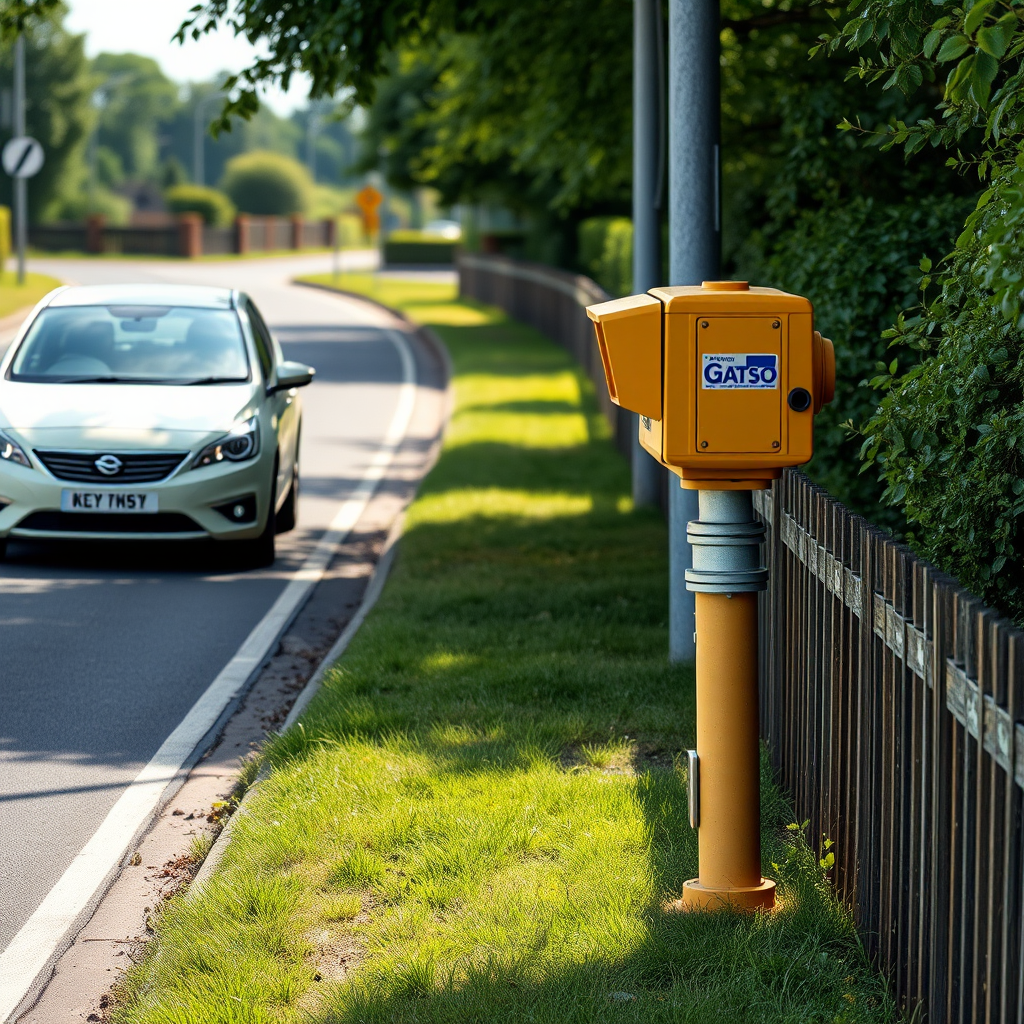

British roads record more than 1,600 deaths each year despite the extensive installation of speed cameras, demonstrating how vital these devices are for preventing collisions.
Yet a significant number of motorists lack clarity about how these instruments function and the exact conditions under which penalties are issued.
Confusion continues around the commonly referenced 10% plus 2mph principle and average speed check systems, with numerous false beliefs about enforcement limits persisting.
Breaking the rules can result in £100 fines and penalty points on a licence, with more serious cases potentially leading to court action.
The Actual Trigger Point for Camera Activation
A common belief holds that a universal 10% plus 2mph tolerance is written into law, but this is inaccurate.
A spokesperson from BigWantsYourCar.com explained that the notion that driving at 35mph in a 30mph area is permissible represents one of the biggest misunderstandings they come across. From a legal standpoint, a driver becomes liable for a penalty the moment they exceed the limit by even a single mile per hour.
Although the National Police Chiefs’ Council does recommend a 10% plus 2 margin to give officers flexibility in their decision-making, this constitutes guidance rather than a statutory threshold and may vary depending on the particular enforcement zone or the officer reviewing the case.
The RAC guidance states that the law is clear that penalties apply as soon as the speed limit is breached, meaning travelling at 31mph in a 30mph zone or 71mph on a motorway represents an offence that could result in fines. It is essential to recognise that this is entirely dependent on the individual officer who witnesses the breach, and that officer has discretion over whether to issue a penalty. The most sensible advice is to never exceed speed limits.
How Cameras Function
Enforcement cameras utilise radar technology or sensors embedded in the road surface to measure how fast vehicles are travelling and record any offences.
While older versions relied on photographic film, current equipment operates digitally and can work out average speed over longer stretches of road.
These digital systems record the speed of the vehicle, when and where the offence occurred, the vehicle’s registration number, the posted speed limit for that road, and in some cases, they also capture clear images of the driver and passengers.
Common Misunderstandings
Other widely held misconceptions include:
Regarding the Visibility of Speed Vans
There is no legal requirement for enforcement vehicles to remain visible at all times, meaning officers may legitimately carry out operations in darkness. However, this is uncommon, with authorities stating that visible positioning acts as an effective deterrent.
Go Safe Casualty Reduction Officer Gareth Thomas observed that legally, visibility is not mandatory, that he could technically hide if he wanted to, but their philosophy focuses on transparency, learning outcomes and preventing crashes. He noted that even if he were to leave the vehicle and walk away, simply having it there would discourage speeding.
Flashing Headlights to Alert Other Drivers
Drivers who flash their headlights to inform others about enforcement vehicles may be breaking the law. Section 89 of the Police Act 1997 makes it an offence to deliberately obstruct a police officer carrying out their duties.
However, Gareth mentioned that while this is technically an offence, actually proving such cases is very difficult in practice. He stated that he does not mind drivers who flash warnings, and that his aim is educational, with the van acting as a deterrent to excessive speed.
What Happens When Speeding is Detected
The response to recorded speeding varies according to the specific situation and how much the limit was exceeded. The baseline penalty for speeding on British roads is a £100 fine.
Gareth advised that in some circumstances, police may give drivers the option of attending a speed awareness course instead of paying a fine and receiving penalty points. He stated that approved courses prove more effective at changing driver behaviour and improving road safety.
These courses are available to drivers who respond quickly to notifications and were travelling at no more than 10% plus 9mph over the posted limit.
Therefore, any driver travelling above 86mph on a motorway would not be eligible for this educational option. Additionally, those who do not have a clean driving licence at the time of the offence, or who have completed such a course within the previous three years, are normally barred from this alternative route.