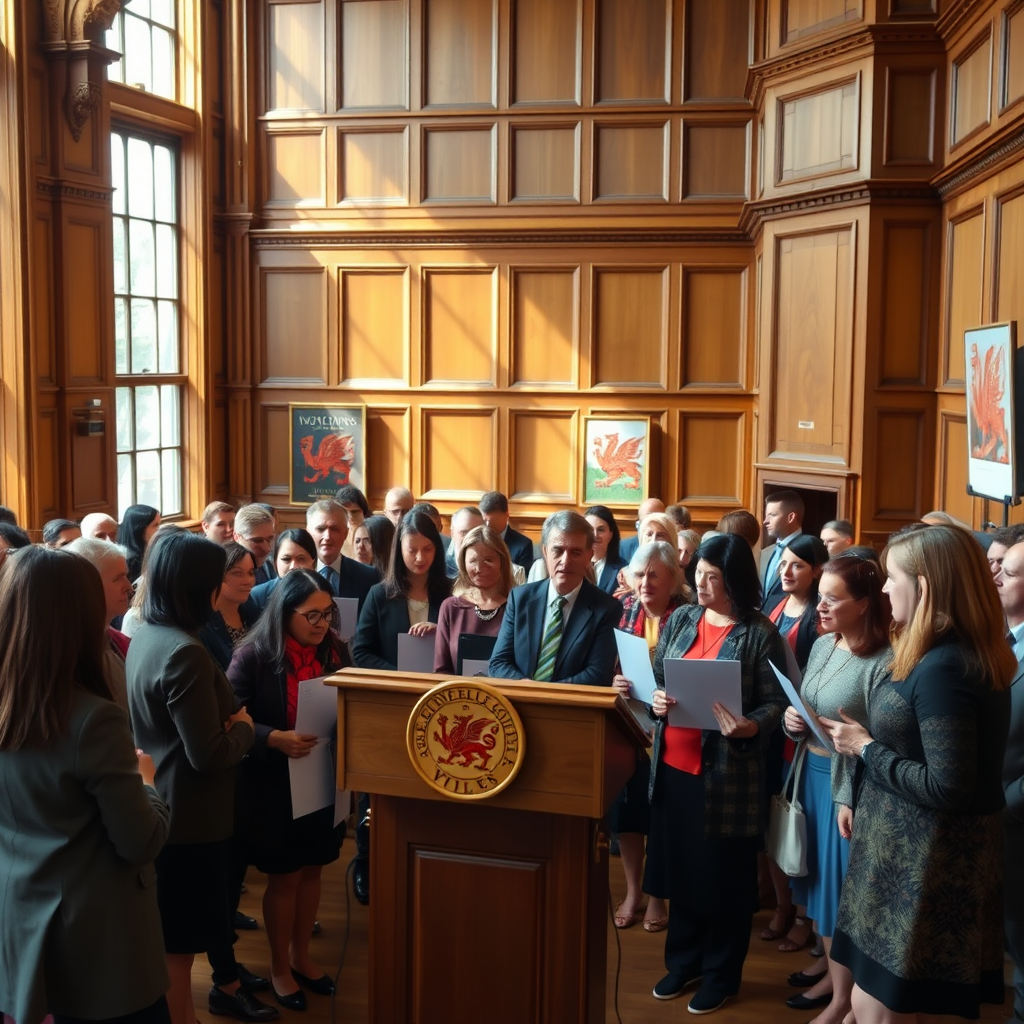

Forty-four people have joined the Learned Society of Wales as members.
Women represent 52 percent of the latest appointees, marking the highest proportion of females in the organisation’s past.
The cohort encompasses research, innovation, and leadership positions across artistic, humanistic, and scientific disciplines.
Hywel Thomas, the president of the Learned Society of Wales, stated that the arrival of new members represents one of the most significant dates on the society’s yearly schedule.
He congratulated them on receiving this recognition of the standard and influence of their work and service to Wales and beyond.
The institution expects to incorporate their knowledge and perspectives into its efforts regarding policy creation and researcher development.
The choices reflect the organisation’s ongoing commitment to promoting equal opportunities and variety.
Mr Thomas remarked that he was pleased the institution’s equality, diversity, and inclusion efforts were beginning to yield results as growing numbers of women join the Fellowship.
In three of the last five years, women have made up roughly or just over half of new inductees.
This achievement results from purposeful approaches to embedding equality, diversity, and inclusion principles across all activities, streamlining the nomination procedure, and organising gatherings specifically designed for female academics and community figures potentially interested in fellowship membership.
This year’s intake includes musical professionals Professor Helena Gaunt, Dr. Iwan Llewelyn-Jones, and Professor Iain Quinn.
Chris Catling, who heads the Royal Commission on the Ancient and Historical Monuments of Wales, has also been elected.
In the science and engineering sector, Professor Cinzia Giannetti received recognition for her research into artificial intelligence within manufacturing settings.
Professor Yacine Rezgui was elected for his contributions to the Optimise AI programme, which tackles energy consumption and carbon output in non-domestic buildings.