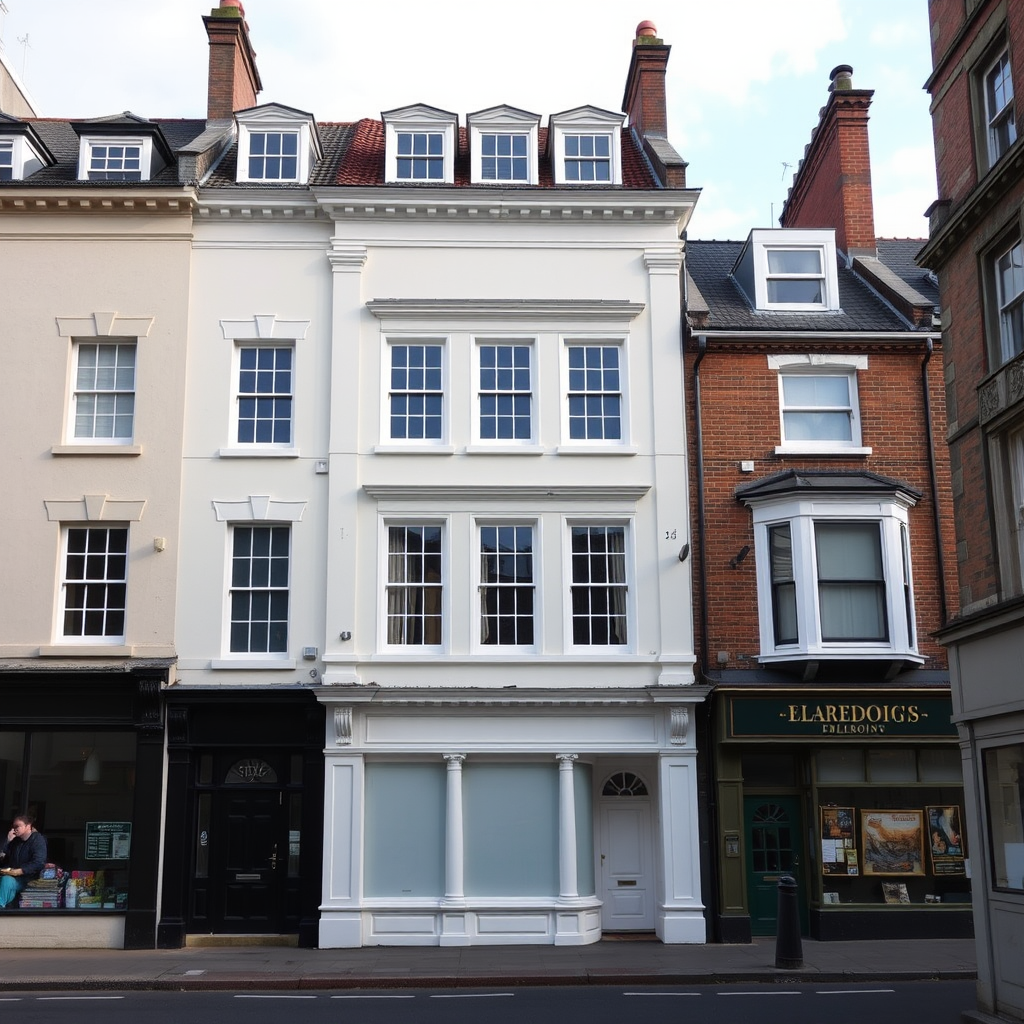

Plans for an eight-bedroom accommodation facility have been rejected despite hopes it would help meet urgent housing needs.
The project involved converting the upper floors of a Grade II-listed building on Clarence Place in Newport into an eight-bed facility, but Newport City Council turned down the bid over concerns regarding living standards and potential impact on the local area.
The building, formerly a restaurant located next to the Old Arts College, has been empty for a considerable time and become associated with problematic activity.
While planning officers acknowledged that restoring the property would improve a main gateway to the city and supported the concept of providing temporary accommodation, they concluded the scheme would create substandard living conditions and generate unfavourable consequences for neighbouring properties.
The design included en-suite bathrooms, a small communal kitchen, and a large roof terrace.
The main criticisms centered on the lack of internal shared spaces, reliance on the rooftop area, and potential for disturbance and privacy issues.
Five local residents, mostly from the Old Arts College development, raised objections that the terrace would overlook bedrooms and bathrooms and could cause noise disturbances in the evenings.
Gwent Police also voiced concerns, noting that Clarence Place and Chepstow Road already face a coordinated response to problems including drug-related activity, public drinking, and anti-social behaviour.
They warned that adding another similar facility could stretch police capacity and harm relationships with the community.
Officers determined the scheme constituted overdevelopment and identified design deficiencies.
These included the lack of a communal sitting room, an undersized kitchen, and dependence on an exposed roof terrace as the only significant shared outdoor space.
They noted that one ground-floor bedroom would have direct access to the roof terrace, resulting in inadequate privacy and possible disruption for its occupant.
The positioning of cycle and waste storage on the first floor, necessitating a cumbersome route to move items and rubbish, was considered impractical.
Councillors also compared this scheme to a previously approved five-bedroom house in multiple occupation for the same building, concluding that the new proposal offered inferior facilities.
The council ultimately decided that the combination of high occupancy numbers, limited communal amenities, and significant impact on nearby residents would adversely affect residential living conditions.
Permission was denied under key Local Development Plan policies relating to design, amenity, and public health.