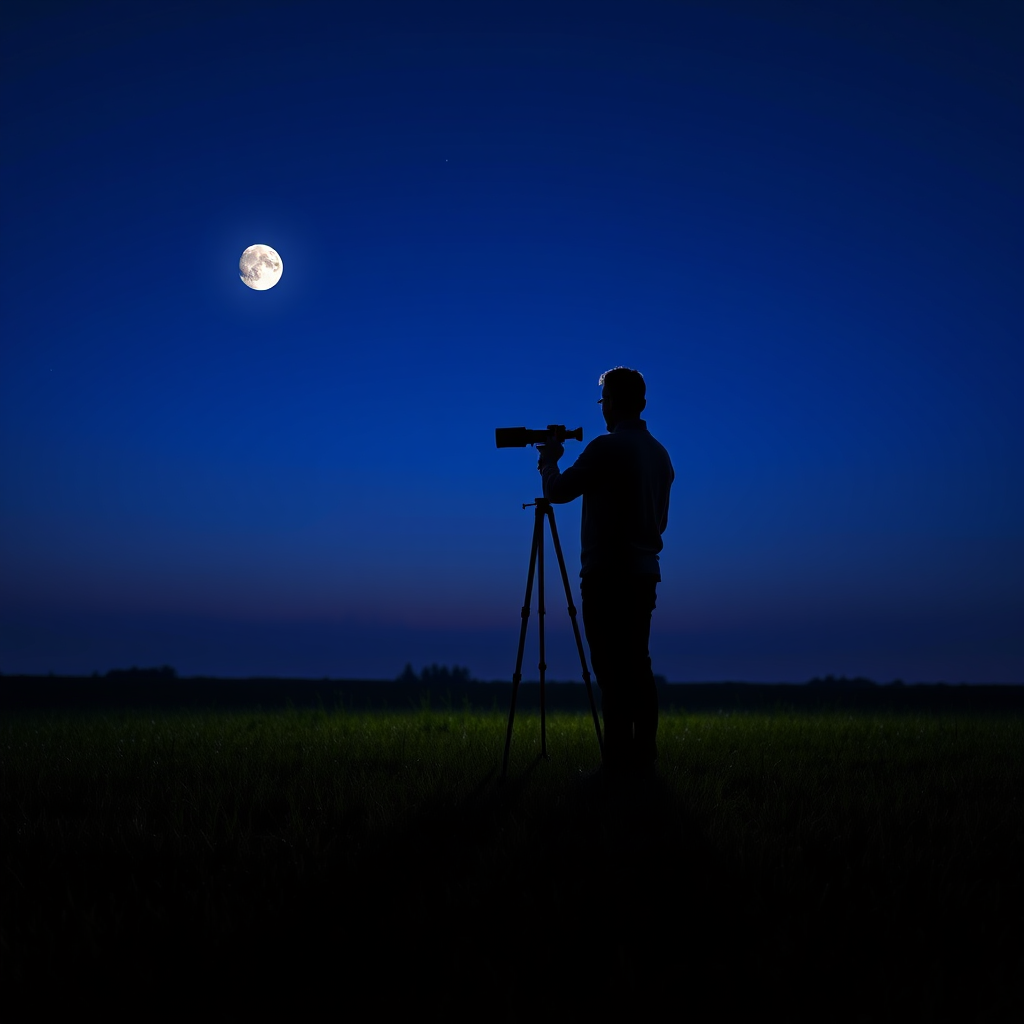

With nights becoming longer, the fading daylight of late April presents another opportunity to view Venus as the evening star blazing in the western heavens after the sun goes down.
As May arrives, Venus maintains its prominence, currently slipping beneath the horizon close to 11 p.m. and continuing until roughly midnight, signalling the shift from spring into summer. Jupiter, located within the Gemini zodiac sign, rises approximately an hour afterward and remains impressive; while not equalling Venus in brilliance, it ranks as the second-most luminous object visible all night.
The Artemis 2 mission achieved a fresh achievement earlier this month, reaching the farthest distance ever attained by human explorers at 252,760 miles. Meanwhile, the most distant machine ever launched from our planet pushes deeper into space, currently situated 15 billion miles away.
Voyager 1 launched from Earth in 1977 with an initial five-year investigation of the outer Solar System but, rather like an remarkably long-lasting device, continues functioning. At the start of this year, the engineers tasked with keeping the spacecraft operational faced an unforeseen reduction in power supply. Their remedy involved switching off one of the probe’s science devices to conserve electricity. This leaves just two functioning instruments from the ten that were active almost five decades ago.
Signals exchanged between NASA and Voyager presently need 23 hours and nine minutes in each direction. By January 2027, this communication loop will stretch to approximately one light day—a full day for sending and another for receiving a response.
To demonstrate Voyager’s remarkable journey: the usual separation between Earth and Mars amounts to 140 million miles, while Neptune, the most distant planet, sits at an average 2.8 billion miles from Earth. The closest star to our solar system, Proxima Centauri, lies roughly 4.2 light years distant (one light year equates to 5.88 trillion miles). Even with adequate power remaining, the spacecraft would need another 74,000 years to arrive at Proxima Centauri travelling at its current speed of 38,000 mph.
Both Voyager and its sibling Voyager 2 carry the Golden Record bolted to an exterior panel. This record holds greetings in 55 languages for potential finders, alongside musical pieces—including Chuck Berry’s Johnny B. Goode, which found fame in the film Back to the Future.
International Space Station (ISS): For early risers or those having difficulty sleeping, the ISS will be observable across the region this week, though at extremely late hours. Monday, April 27: emerges in the west at 5:20 AM, fades in the east at 5:27 AM. Wednesday, April 29: emerges in the west at 5:22 AM, fades in the east at 5:29 AM.
Send astrophotography entries to: thenightsky@themoon.co.uk