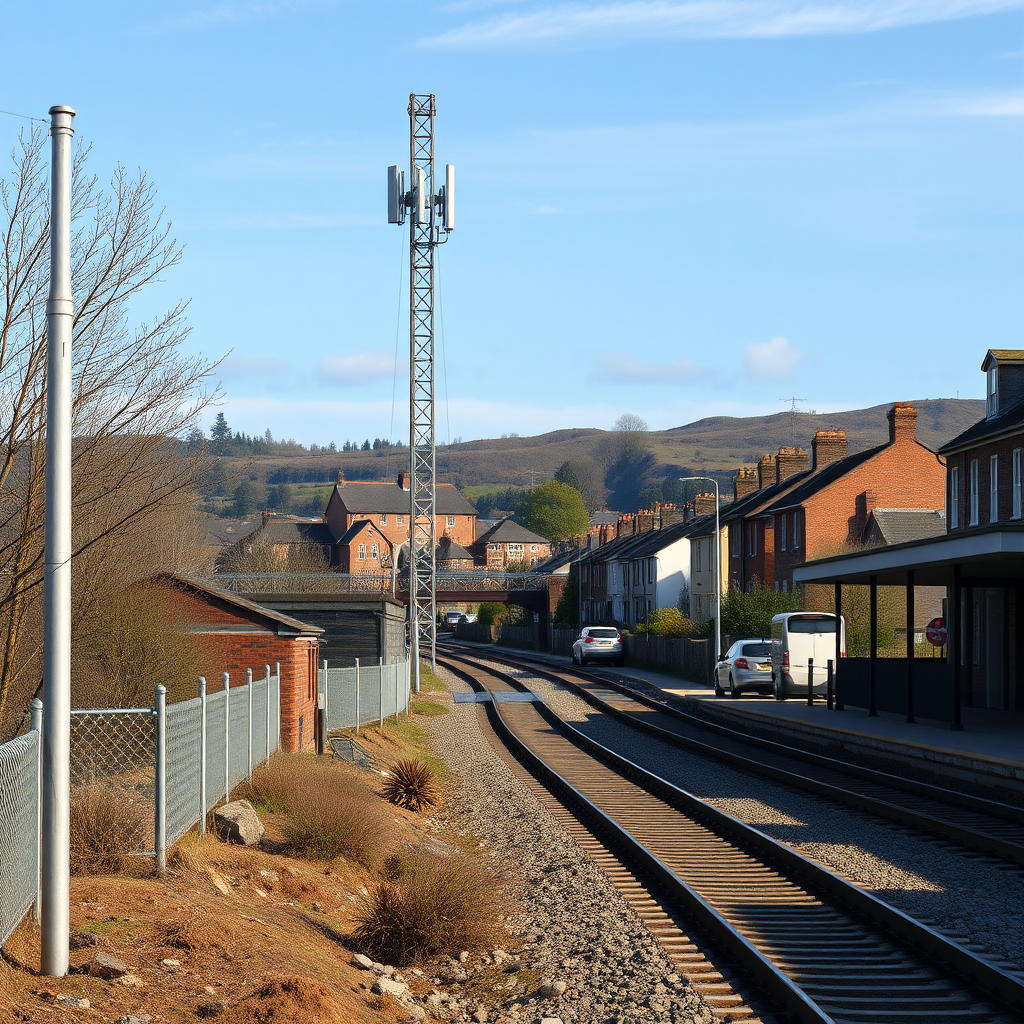

A new mobile network mast is coming to Rhymney after local authority sign-off, despite local protests over its design and proximity to homes.
The installation will reach 25 metres in height and sit on Transport for Wales-owned ground to the north of the town’s rail station.
Planning papers from Caerphilly County Borough Council indicate the main purpose is boosting Transport for Wales’ operations, specifically delivering more reliable railway communications.
The project will additionally deliver enhanced mobile phone connectivity for residents, supporting 4G and 5G services – though officials stressed this was secondary to the main objective.
The consultation period drew multiple complaints – among them one from Blaenau Gwent and Rhymney MP Nick Smith, the documents show – with objections focusing on the structure’s impact on the neighbourhood.
Protesters argued nearby residential development proposals had been overlooked, calling the pylon too large and dominant and saying it would be an unpleasant sight in the area.
They also raised doubts about whether alternative sites might have worked better and asked whether the wider Rhymney population knew about the scheme.
In their assessment, council planning officers recorded that the developer, Atlas Tower Group, described the chosen spot as the sole technically viable and operationally practical location within the designated Transport for Wales search zone.
Officers concurred that proximity to Transport for Wales assets rendered it an appropriate selection.
Visual impact worries were considered, and the mast will surpass surrounding tree heights. However, officials concluded there was insufficient evidence that its visibility would damage use of nearby leisure facilities or impact neighbouring households.
A 25-metre installation constitutes the minimum necessary to cover Rhymney Station, the rail corridor, and the wider technical zone, they noted.
On the matter of public knowledge, planners clarified that signage had been posted in the station car park, though the developer faced no obligation to distribute letters since no houses directly neighbour the application area.