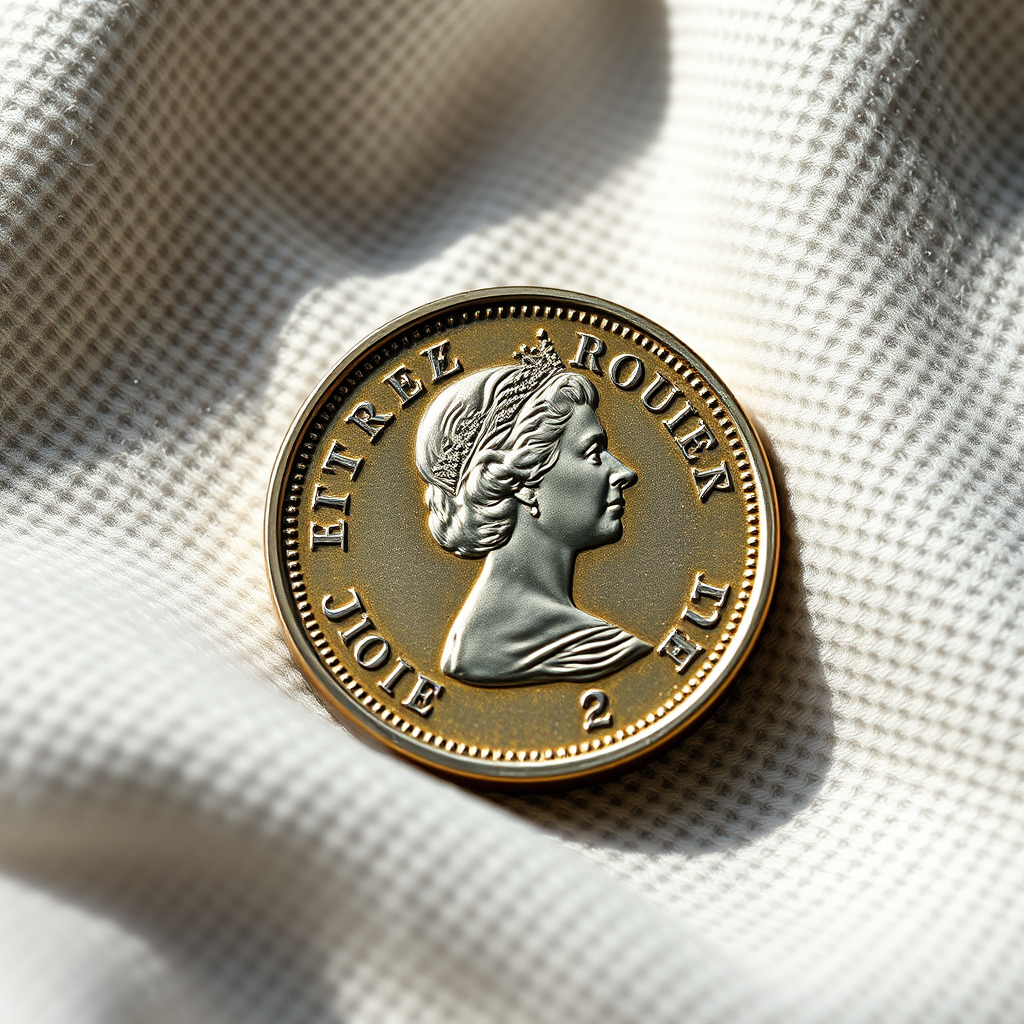

An unusual one-pound coin featuring the Queen’s likeness twice has sold for approximately 700 times its monetary value at auction.
The 2017 specimen commanded £699.30 when it changed hands on the online marketplace on Tuesday March 31st, having been produced with an uncommon manufacturing flaw described as a double strike.
A double strike happens when a coin receives two impressions during the production process.
This typically occurs when a coin has already been stamped but remains stuck in the collar die, resulting in a second impression being applied directly over the initial one.
In many cases, these on-centre double strikes feature rotation between the two impressions, meaning the first and second strikes are not perfectly aligned.
Consequently, the image of Queen Elizabeth II appears duplicated across the front of the coin.
The Nations of the Crown design on the back of the pound coin is similarly reproduced.
The sale listing described the item as a double strike 2017 £1 coin with mint error and noted the doubling visible on the Queen’s portrait.
Following competitive interest with 30 separate offers placed, one determined buyer acquired the coin for £699.30 plus a shipping fee of £3.42.
This transaction represents a sale price approaching 700 times the coin’s spending value, prompting speculation that British consumers will now scrutinise their loose change more carefully.
The one-pound coin was originally launched in April 1983 as a replacement for the one-pound note.
To ensure easy recognition, the circular pound coin was produced with greater thickness than other denominations, while its golden hue distinguished it from the cupro-nickel silver coins already in circulation.
Since that initial release, numerous different versions of the coin have circulated.
In 2017, the traditional round one-pound coin was discontinued in favour of a brand new 12-sided design.
The 50 pence piece has emerged as Britain’s most sought-after and collected coin, with various commemorative designs appearing on its seven-sided surface.
Measuring 27.5mm across, it ranks as the largest of all British coins, providing ample space for intricate imagery. The denomination has frequently been employed to mark significant occasions throughout the past half-century of British history.
The rarest coins typically command the highest prices, with the mintage figure indicating how many specimens of each design were originally produced serving as the primary draw for collectors.
Beyond the design itself, factors that can increase a coin’s worth include its state of preservation and whether it contains any production errors.
The method of sale can also influence value, with some collectors willing to spend substantial sums through internet platforms or auction houses while others prefer more conservative valuations by trading through established coin dealers.
The top 10 most valuable 50p coins, along with their production years and minting figures, are as follows:
Atlantic Salmon (2023), 200,000
Kew Gardens (2009), 210,000
Olympic Wrestling (2011), 1,129,500
Olympic Football (2011), 1,161,500
Olympic Judo (2011), 1,161,500
Olympic Triathlon (2011), 1,163,500
Peter Rabbit (2018), 1,400,000
Flopsy Bunny (2018), 1,400,000
Olympic Tennis (2011), 1,454,000
Olympic Goalball (2011), 1,615,500