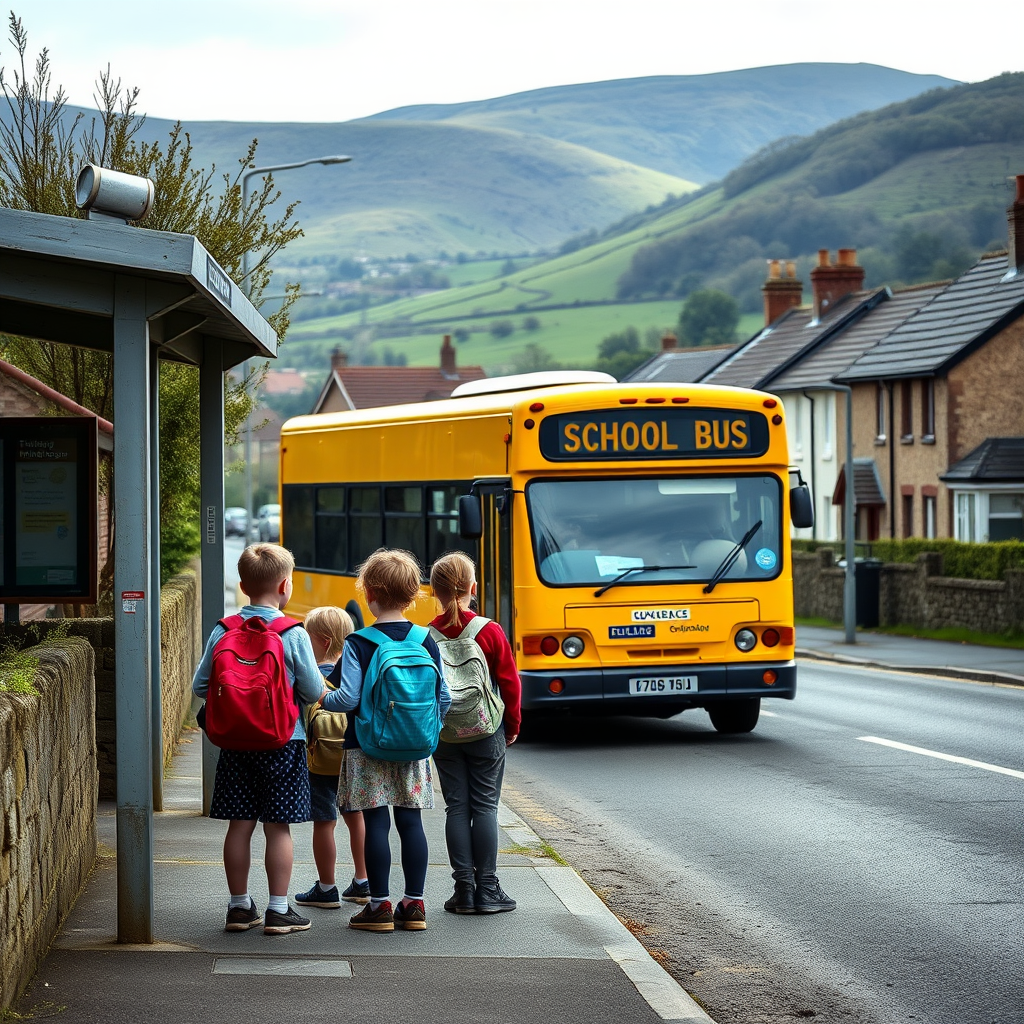

More than 300 individuals have added their names to a campaign opposing Caerphilly Council’s proposal to eliminate complimentary transport services in Aberbargoed – with this representing just one of nine routes potentially impacted across the borough.
The local authority is set to phase out educational travel provision for approximately 340 learners following determinations that these journeys are secure and fall beneath the two-mile threshold for eligibility.
Those backing a fresh petition declare they strongly disapprove of eliminating the bus arrangement for Aberbargoed youngsters attending Heolddu Comprehensive in Bargoed.
They maintain that scrapping the provision places unreasonable strain on children as young as eleven, who would be required to cover substantial and difficult distances to their educational establishment unaccompanied.
Caerphilly Council acknowledged the reductions would let down certain community members, yet stated the corridors had been certified as safe following a thorough and consistent evaluation method.
Nine corridors have been identified for potential service withdrawal – with any students residing along these corridors and residing within two miles of their institution anticipated to independently reach lessons from September onwards.
The subsequent corridors are understood to be affected:
Aberbargoed to Heolddu Comprehensive;
Abertridwr to St Cenydd Comprehensive;
Bedwas/Trethomas to Ysgol Y Gwyndy;
Caerphilly to Bedwas High School;
Gelligaer/Penybryn/Tiryberth to Lewis Girls School;
Llanbradach to Ysgol Y Gwyndy;
Maesycwmmer to Lewis Girls School;
Maesycwmmer to Ystrad Mynach College;
Trinant to Islwyn High School.
The digital petition opposing the reductions for Heolddu Comprehensive has gathered signatures from over 300 individuals thus far.
It challenges the authority’s safety assertion, since the corridor involves walking alongside and crossing heavily trafficked arterial roads, frequently lacking sufficient illumination or appropriate crossing facilities.
The campaigners additionally contend that learners’ wellbeing will suffer should they be left without accompaniment on a route lacking supervision, and will continue wearing damp attire throughout the school day when forced to cover an almost four-mile return journey during inclement conditions.
The campaigners contend that not all youngsters possess the capability to independently manage such a trek. They note that maturity levels, self-assurance, and road safety awareness differ, and for numerous households, the dangers are simply excessive.
They have urged the authority to revisit the proposal and restore the bus provision, or supply a secure, dependable and suitable replacement travel arrangement.
Their representations follow censure of the approach from the authority’s Plaid Cymru opposition – the group’s leader, Cllr Charlotte Bishop, stated safety must take precedence over policy.
Cllr Jamie Pritchard, who heads the Labour-led authority, has justified the modifications and stated Caerphilly continues to be amongst only a handful of local authorities in Wales providing such extensive access to complimentary travel for students.
Previously, an authority representative commented that they recognised these modifications were liable to provoke worry and dissatisfaction, yet the authority must adopt an equitable and uniform method in implementing their travel policy.
The representative stated each corridor had undergone evaluation in accordance with national recommendations. They added that student safety constitutes their principal concern when reaching these determinations and the corridors that have undergone reassessment are now considered safe, consequently their policy requires appropriate application.