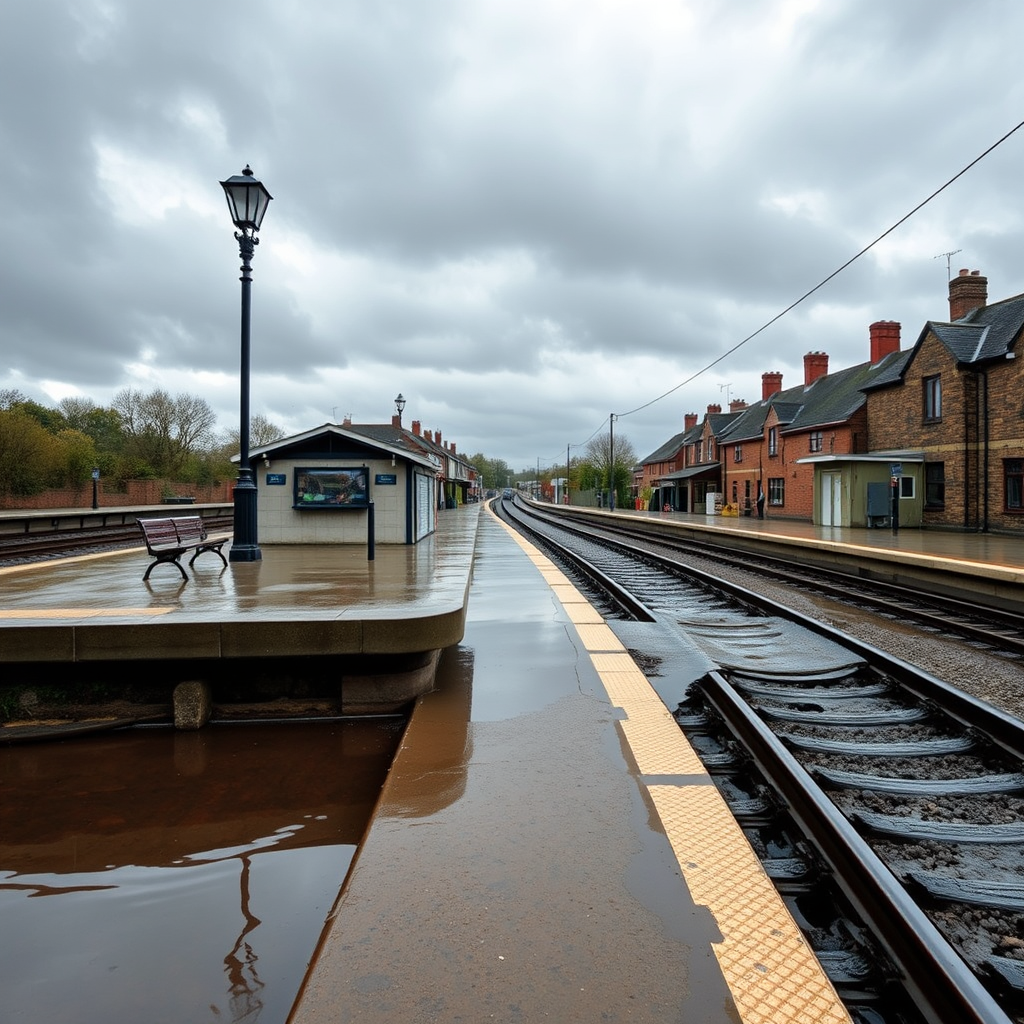

Rising temperatures are creating escalating problems for the railway network.
Across Wales, locations such as Abergavenny, Ebbw Vale Town and Cwmbran have each logged hundreds of incidents connected to flooding in the past decade.
Abergavenny registered 577 occurrences between 2014 and 23 December 2025, Ebbw Vale Town recorded 261, and Cwmbran documented 212, according to information obtained under Freedom of Information legislation by the environmental charity Round Our Way.
Cardiff Central logged in excess of 1,000 flood-related occurrences during the same timeframe.
Gemma Plumb, a forecaster at Weather Change, stated that passengers are experiencing growing disruption to their travel plans due to heavy precipitation and flooding, which causes considerable annoyance for those who depend on the railway system for transportation.
She noted that rising global temperatures are producing more severe weather conditions, including more powerful rainfall episodes.
This occurs because a hotter atmosphere contains greater quantities of water vapour, meaning precipitation tends to be heavier when it arrives.
Inundation, ground slips and torrential downpours are progressively resulting in train services being cancelled or delayed throughout the network, with the Met Office indicating that the ten-year period from 2015 to 2024 was two per cent wetter than the 1991 to 2020 timeframe, and ten per cent wetter than the 1961 to 1990 period.
Sofie Jenkinson, deputy director at Round Our Way, commented that the railway system appears to be enduring continuous weather pressure as climate change begins to affect it more routinely.
This results in considerably increased waiting times for rail travellers.
The nation remains unready for the effects that climate change is already having on everyday life for ordinary people in Britain.
It is evident that extended-term durability strategies and financial commitments are vital if the railway system is to remain operational, and for preparing the nation for the future alongside continued efforts to reduce emissions.