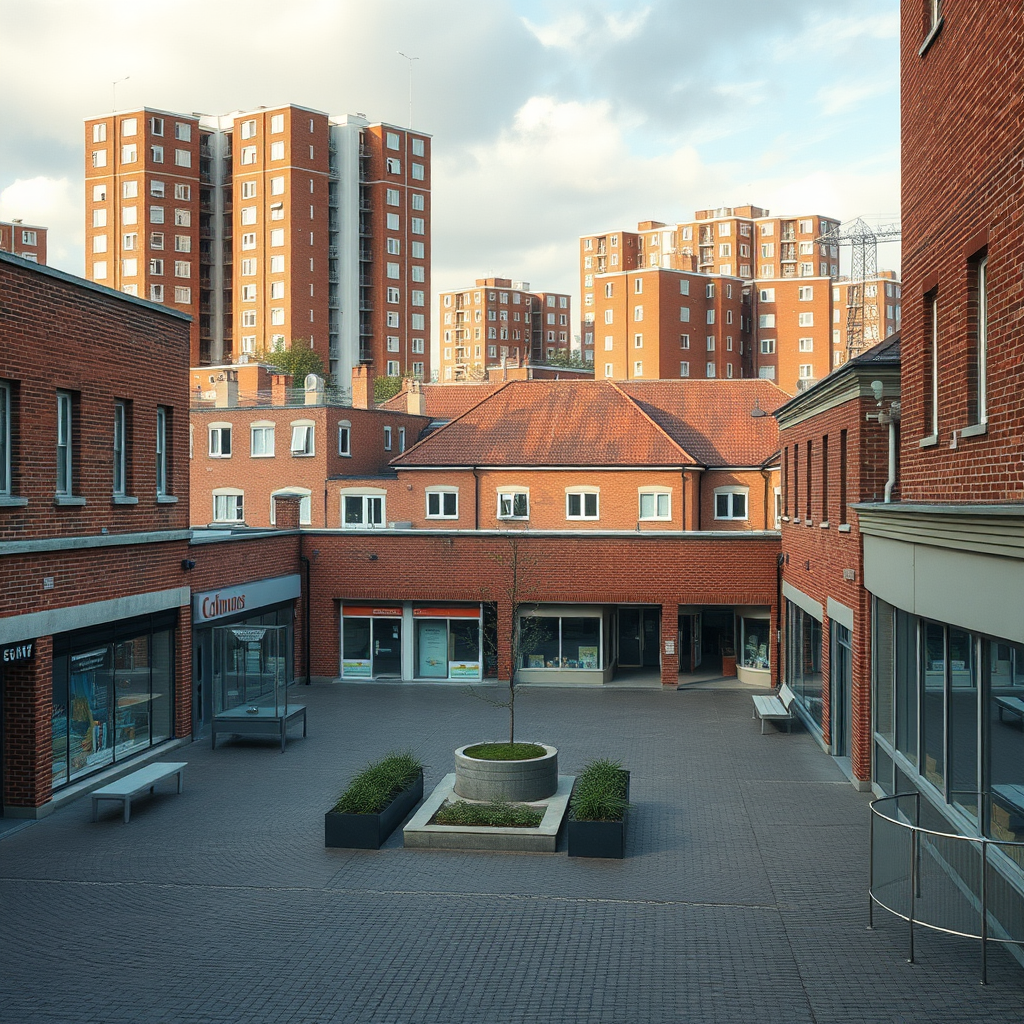

A former bustling retail development is generating fresh optimism about its prospects.
Fairwater Square in Cwmbran, established during the mid-1960s, was conceived as one of several residential district centre hubs within the Cwmbran new town initiative—a collection of self-sufficient facilities designed to provide everyday necessities within a short stroll.
Despite lacking any ambition for grandeur, the development embodied an innovative approach to suburban design, influencing how families conducted their daily routines for decades.
Gordon Redfern, the principal designer behind the project, envisioned Fairwater as one of Cwmbran’s most extensive suburban facilities.
The complex consisted of a compact quadrangle of concrete retail spaces surrounding a pedestrian plaza, with substantial building facades that shielded shoppers from Monmouthshire weather. This layout formed part of a broader ambition for the new town, ensuring each housing estate possessed its own accessible commercial area so residents need not always travel to the main town.
During its peak years in the late 1960s and 1970s, Fairwater Square buzzed with activity.
The precinct comprised 18 commercial spaces selling food, educational items, and household goods, alongside a newsagent, dental practice, and medical facility. A public house and community hall were also situated close by.
Eight of the centre’s unique hexagonal outlets contained two-bedroom apartments above them, enabling employees to reside on the premises and observe the square below.
For numerous youngsters, a trip down the path to Fairwater shops became an everyday habit—whether completing small tasks, spending pocket money on confectionery, or purchasing a comic.
Images from that period display a gleaming newly constructed retail development featuring level roofing, neat storefronts and spacious walkways—contemporary, practical, and full of potential.
Residents posting recollections on local history forums recall it as their inaugural experience of purpose-built, accessible amenities—a stark difference to the older commercial terraces they had departed from.
For those raised in the district, Fairwater Square served not merely as a shopping destination, but as the focal point of everyday existence.
Nostalgia communities remember the climbing frames situated just off Fairwater Way, the playground pathways, and the snack purchases before returning home. Newcomers to the area during the 60s and 70s maintain the precinct assisted them in feeling integrated into the neighbourhood.
Others recollect their initial weekend employment in the outlets, serving familiar faces they had known since childhood.
Over the years, shifting shopping patterns and the downturn of smaller centres have taken their toll.
Several original storefronts have been lost, and the concrete has deteriorated.
Nevertheless, vintage photographs of Fairwater Square frequently initiate online discussions brimming with recollections of signage, beloved takeaways, and the sound of rainfall on a Friday afternoon.
This combination of fondness and exasperation has sparked fresh optimism for revitalisation.
In 2025, locals and business owners initiated the Fairwater Square Regeneration Campaign, pushing for contemporary upgraded retail spaces, improved residences, and a more secure, environmentally friendly public area.
They are requesting that Cwmbran’s £20 million Long-Term Plan for Towns funding incorporate investment in district hubs such as Fairwater alongside the primary centre.
No concrete proposal has been approved as yet, but supporters have already outlined their position to the community council and are pressing the town’s regeneration board to maintain Fairwater’s prominence in planning.
They anticipate that any alterations will preserve Fairwater Square’s essential character—a recognisable and crucial component of the estate, prepared to serve another generation.