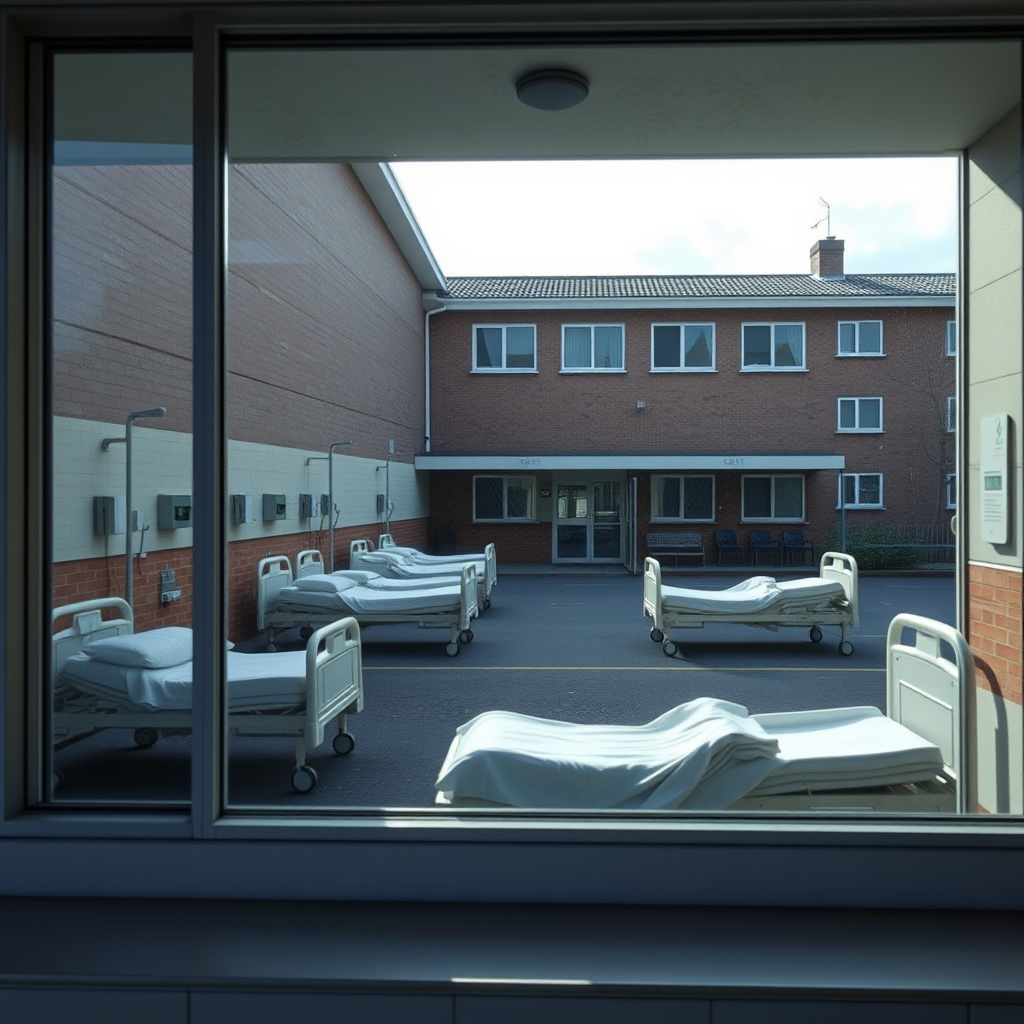

It is somewhat worrying that Ms Bowen-Davies, who serves as the Older People’s Commissioner for Wales, believes certain terminology like ‘frightening’ or ‘warzone’ should not be applied when describing inpatient healthcare for those without a hospital bed placement; she makes a valid point. Nevertheless, failing to acknowledge what is actually occurring would be inappropriate.
Could the elimination of almost 100 beds at St. Woolos in 2024 have contributed to more recent difficulties that ought to have been anticipated? It appears that there was insufficient practical reasoning, savings that failed to materialise as expected, and those in managerial positions refused to take responsibility for poorly thought-out and hastily arranged strategies. Indeed, over the course of 25 years, numerous additional wards at this distinctive hospital were shuttered. It appears the facility may eventually be converted to residential use, though this remains uncertain.
What is certain is that the Grange operates as an acute facility. Its services are designed for acute treatment, and from there, individuals are transferred to suitable peripheral hospitals or centres to proceed with their care programmes, contingent upon bed availability. It was unexpected that St Woolos could not have been converted into a more recovery-focused and supportive setting for those whose requirements did not necessitate medical or nursing attention. Surely it would have been possible for ABUHB to collaborate with relevant organisations; might this not have been something the Older Persons’ Commission could have examined?
Nevertheless, an ABUHB special advisor acknowledged in 2024 that the circumstances had reached the point where closure was appropriate. Was anyone provided the opportunity to present a different perspective?
Consequently, we now witness at the Grange and the limited peripheral hospitals across Gwent, treatment areas where elderly individuals are being placed in hallways, day rooms and ambulances while bed placement is arranged. This situation should never have been permitted.
Ms Bowen-Davies transitioned from the police force and has held numerous leadership positions, now including the role of Older People’s Commissioner for Wales, which carries a budget of £1.7 million, so perhaps rather than merely remarking on the normalisation of treating frequently elderly individuals in such degrading circumstances, greater emphasis could be directed toward identifying where supported care is actually delivered. She believes confidence has been eroded; indeed, she and her commission possess a sufficiently substantial budget to make genuine efforts to rebuild this trust.