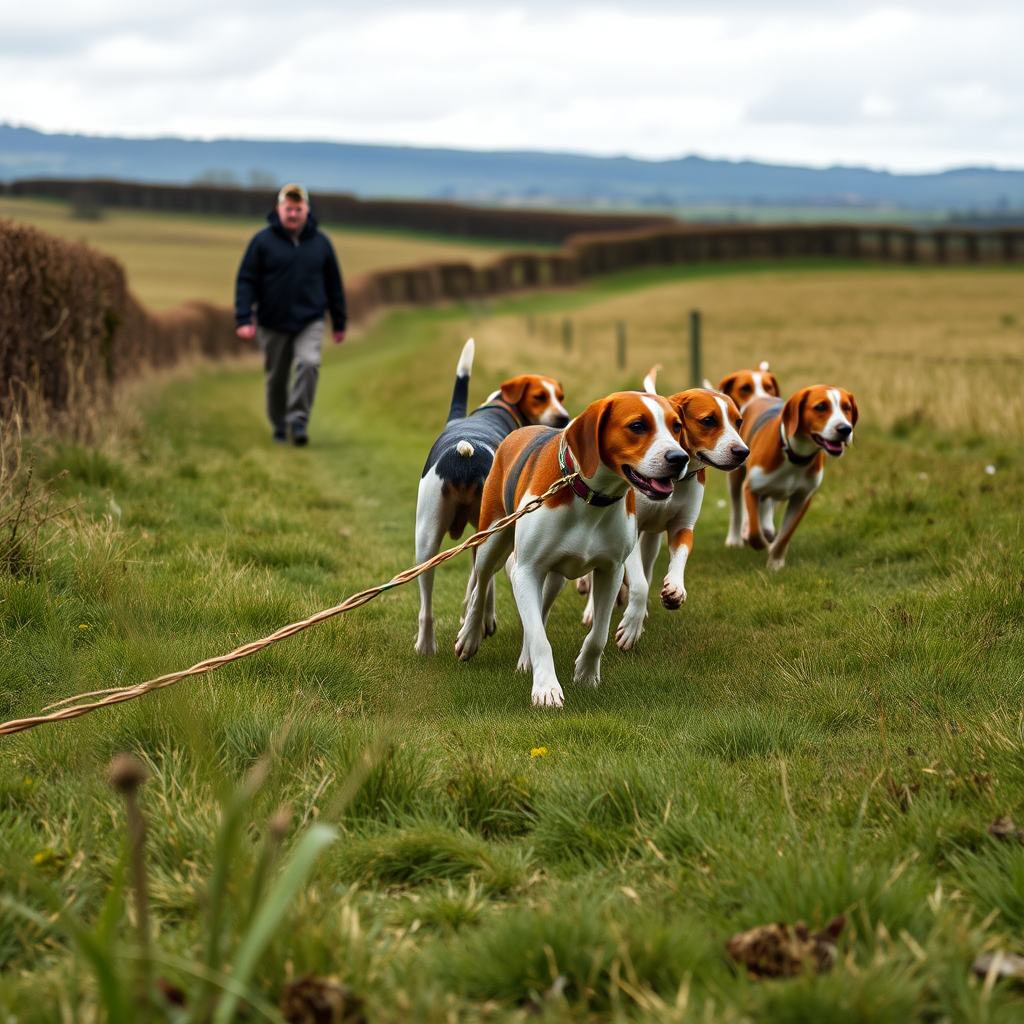

A prohibition on trail hunting is being introduced across England and Wales.
The UK Government has begun a public consultation regarding these plans, with the goal of honouring a key election promise by making the activity illegal. Opponents maintain that the practice endangers both wild and domesticated creatures.
In trail hunting, packs of hounds track a scent laid down beforehand using animal products. The activity proliferated once conventional fox hunting was prohibited through the Hunting Act 2004.
Baroness Sue Hayman, the minister responsible for animal welfare, expressed that the Government had committed to outlawing trail hunting in their manifesto and intended to follow through on that promise.
She noted that the characteristics of trail hunting make it challenging to guarantee that wild and domestic animals remain safe from harm or injury, which is plainly unsatisfactory.
The UK Government is keen to promote alternative pursuits that do not threaten animal welfare.
A spokesperson indicated that activities such as drag hunting and clean boot hunting, which employ non-animal scents, should be allowed to prosper.
The spokesperson acknowledged that hunting activities can sustain employment and local enterprises while uniting communities throughout rural areas.
Fears have escalated that trail hunting is serving as a pretence for unlawful hunting, with packs occasionally chasing and killing live wildlife including foxes and hares.
Assistant Chief Constable Matt Longman, who heads the National Police Chiefs’ Council’s work on hunting matters, has previously observed that trail hunting provides individuals with the chance to continue hunting despite the prohibition implemented two decades ago.
The UK Government has committed to gathering perspectives from all interested parties before enacting the ban.
Baroness Hayman stated that the Government recognises this matter involves complications, which is why opinions are being sought from all stakeholders to help determine the implementation approach.
The deadline for responding to the public consultation is June 18.