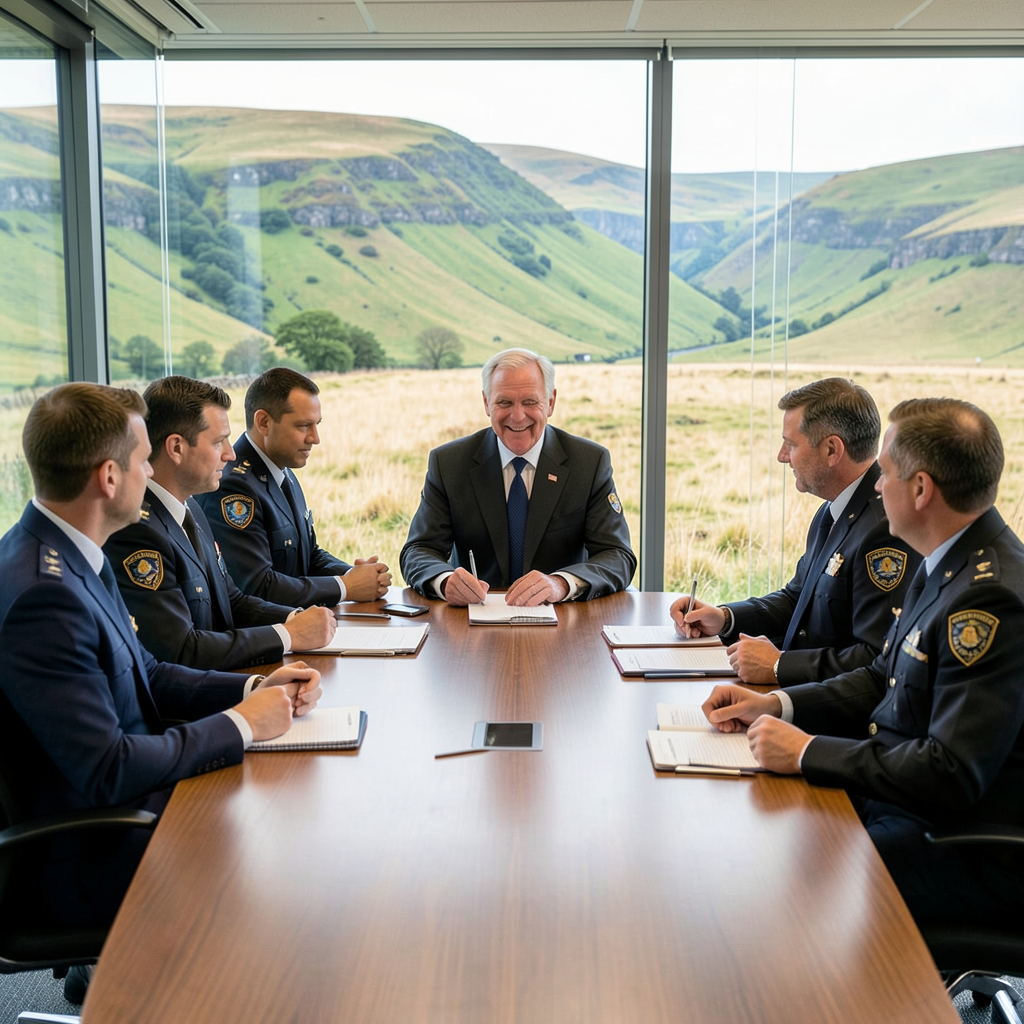

A wildfire risk summit at the Welsh Government’s Merthyr Tydfil offices brought together senior figures from the fire and police services, environmental specialists, farming and union representatives, and members of the Senedd.
First Minister Rhun ap Iorwerth said the meeting would add urgency to preparations for future wildfire seasons and indicated that Wales needed to be ready for another challenging period during the spring and summer of 2027.
Wales declared four major incidents this summer after fires were simultaneously active at 14 locations, while more than 50 areas were identified as fire zones.
South Wales Fire and Rescue Service recorded a 227% rise in calls and attended more than 1,000 grassfire incidents.
In August, the service received assistance from fire services across England and the UK military.
Officials discussed several measures for reducing the danger posed by wildfires, including vegetation management, controlled burning and methods of making land wetter.
Ap Iorwerth said no single measure would provide a complete solution and that a combination of approaches was required.
The meeting also exposed continuing limitations in Wales’s aerial firefighting capacity.
Air Vice-Marshal Fin Monahan said aerial support was neither prioritised nor formally tasked, forcing crews to obtain helicopters where they could.
He added that aircraft were not maintained at high readiness, meaning they could not always reach the point of ignition quickly enough.
A response delayed by 48 hours would not be effective, he said.
Gareth Tovey, an executive council member of the Fire Brigades Union, described the shortage of crews as a crisis.
He said inadequate staffing meant members of the public were increasingly helping efforts to extinguish blazes.
Tovey argued that properly trained and equipped professional firefighters were the people able to tackle fires safely, and he opposed using the public in operational roles to compensate for years of underfunding.
He said community resilience remained important, but it should not replace adequate professional capacity.