
A conservation initiative to enhance water levels at Wales’ largest lowland wetland has received a distinguished engineering accolade.
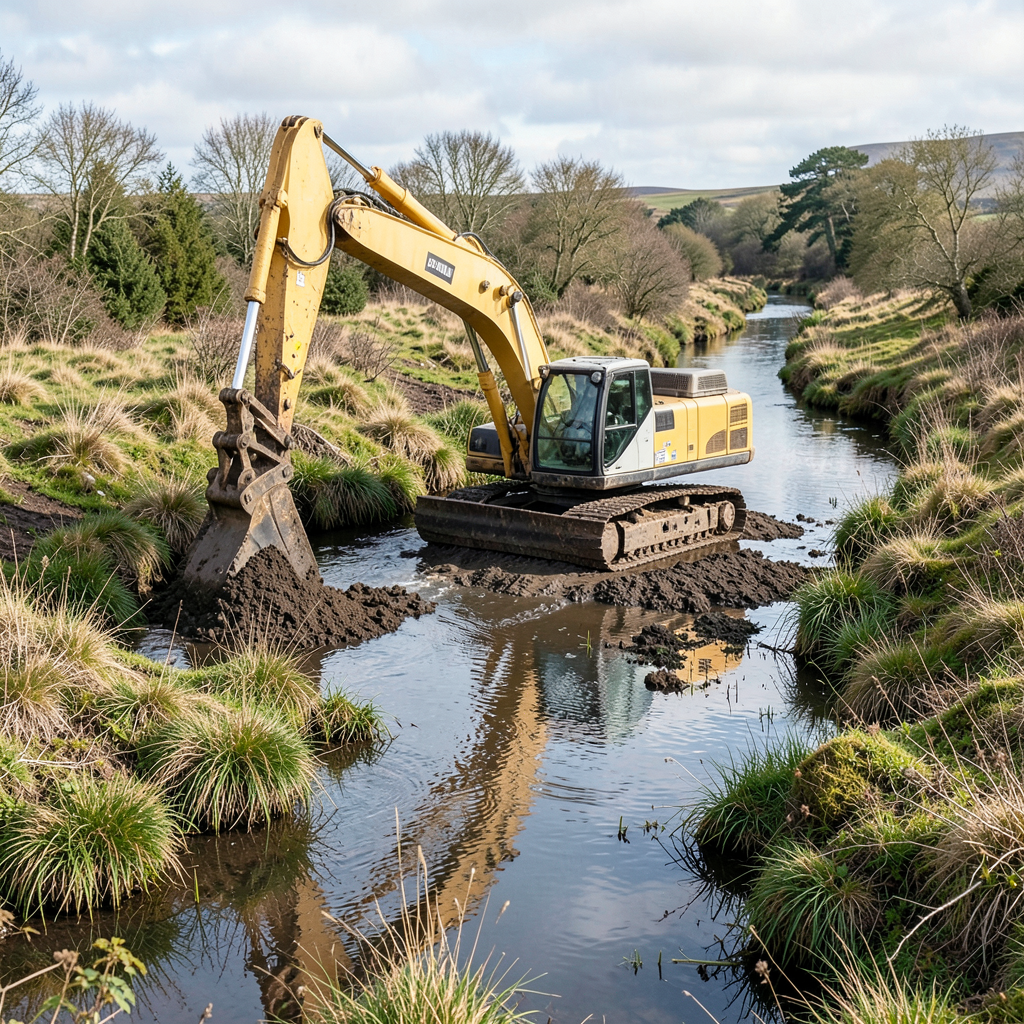
Amphibious equipment was deployed to dredge the two-kilometre Glan y Wern Canal situated at Crymlyn Bog adjacent to Swansea, facilitating improved water circulation throughout the marshland.
The undertaking, executed via Natural Resources Wales’ LIFEquake initiative, was honoured with the Chair’s Award at an Institution of Civil Engineers ceremony.
Restoring the historic waterway, originally excavated by hand, presented unique obstacles given its location running through the heart of the bog, where saturated peat deposits shift beneath surface activity.
Deploying heavy plant on such treacherous terrain proved exceptionally demanding, with officials from NRW stating that prior site conditions had rendered successful remediation improbable.
The completed project now enables more efficient regulation of hydrological levels, establishing improved circumstances for sphagnum mosses and additional wetland vegetation.
Peatland ecosystems function as carbon repositories, assist in flood management and support diverse wildlife populations.
Sustaining moisture within the peat proves vital for preserving these ecological functions.
Gareth Thomas, who oversaw the LIFEquake initiative, noted that the recognition represented a notable accomplishment for environmental stewardship.
He observed that engineering accolades customarily celebrate substantial construction ventures, yet in this instance specialised floating equipment had been employed to reinstate a significant natural environment and provide biodiversity with optimal recovery prospects.
Thomas also expressed gratitude toward the construction firms engaged on the scheme, stating that the collaborative partnership had yielded outstanding results for Crymlyn Bog.
He emphasised that acknowledgement from leading figures within the engineering sector held particular significance.
The LIFEquake programme receives co-financing from the European Union alongside backing from the Welsh Government.
Its efforts concentrate on rehabilitating uncommon trembling bog environments, designated as such due to the oscillation of waterlogged peat surfaces when walked upon.