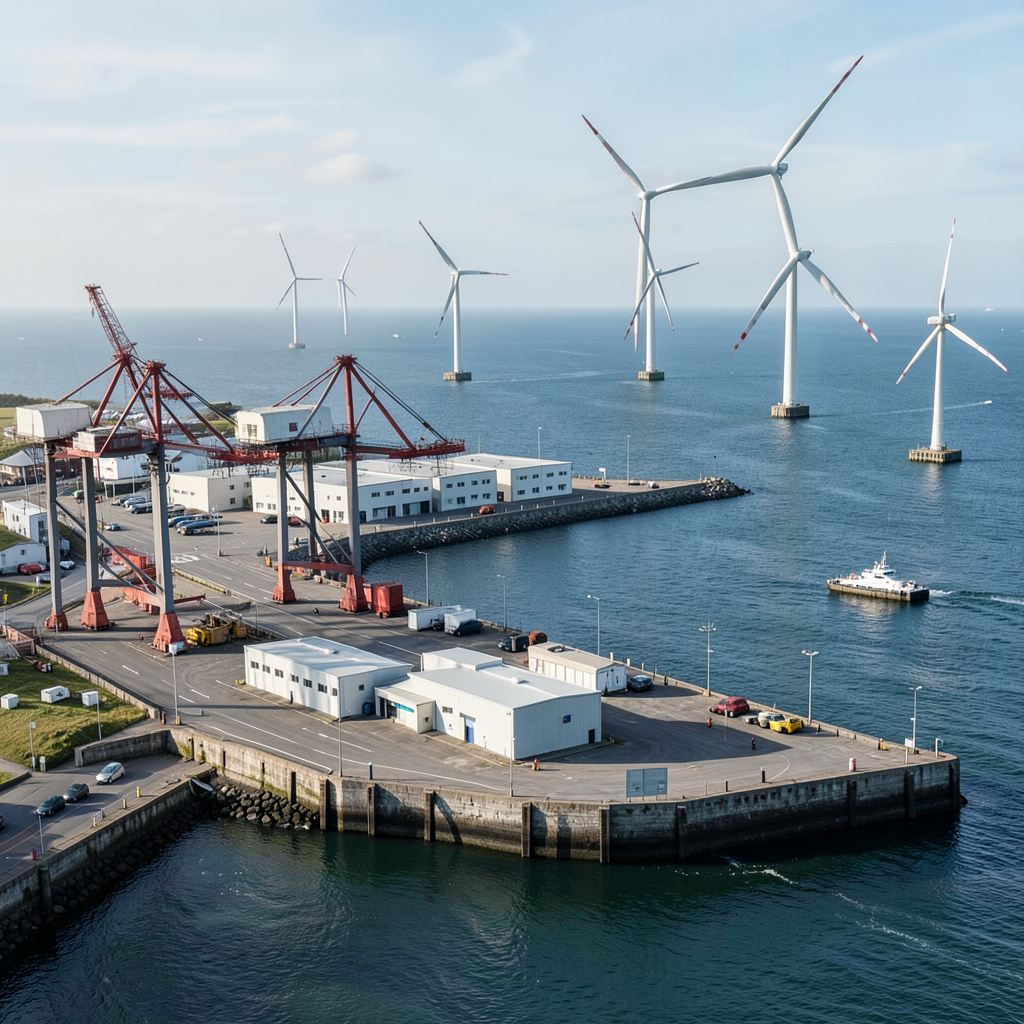

Financial backing worth £18.4 million has been confirmed for infrastructure improvements and commercial workspace development across south west Wales through the Celtic Freeport initiative.
The package will support schemes located in Port Talbot and Pembrokeshire, with upgrades designed to bolster the emerging floating offshore wind sector alongside the construction of six new commercial units.
Capital derives from the UK Government’s Freeport Programme operating within Wales.
Disbursement remains conditional upon finalised grant terms and funding agreements, including provisions for expenditure oversight and potential repayment should requirements not be satisfied.
The most substantial grant totals £7.2 million and supports the Port of Milford Haven’s Criterion Quay redevelopment at Pembroke Port.
Resources will fund the initial phase of marine facility restoration, create extra vessel berths, and establish approximately 1.7 hectares dedicated to staging and processing equipment for floating offshore wind installations.
A separate allocation of £5 million has been directed to Associated British Ports for works at Talbot Wharf in Port Talbot, enabling approximately 9.1 hectares to be prepared for companies operating within the floating offshore wind supply chain.
Neath Port Talbot Council’s Harbourside initiative receives £4.2 million as part of an £8.4 million programme to erect six business premises at Waterside Innovation Park.
Pembroke Dock’s Ledwood quayside improvement scheme has been awarded £2 million to enhance maritime access and facilitate production and movement of floating offshore wind components.
Funding aims to ready sites and facilities for development, with the objective of drawing subsequent private-sector capital into the region.
Celtic Freeport chairperson Chris Martin stated that these four initiatives would establish essential infrastructure to unlock investment, sustain quality employment and stimulate economic expansion throughout the area.
He indicated that the partnership was transitioning from planning phases to implementation, collaborating with stakeholders to translate the freeport’s objectives into concrete advantages for enterprises and local populations.
Welsh Government Cabinet Minister for Enterprise, Connectivity and Energy Adam Price commented that the expenditure would assist in narrowing productivity disparities between Wales and other parts of the United Kingdom.
He noted that economic advancement requires appropriate infrastructure positioned strategically, and that these ventures would unlock areas for investment, support emerging industries and consolidate Wales’s standing within the expanding clean energy market.
UK Government Minister for Wales Stephen Kinnock observed that the investment would generate thousands of new positions, create opportunities and produce lasting economic growth through the nation’s two freeports.
The Celtic Freeport operates as a collaborative venture between public and private sectors, with governance provided by Associated British Ports alongside the two unitary authorities covering Neath Port Talbot and Pembrokeshire, together with the Port of Milford Haven.
Broader strategic ambitions encompass floating offshore wind, hydrogen production, sustainable fuels, carbon capture technology, emissions-reduced steel manufacturing and reduced-carbon freight logistics.
The consortium projects that the freeport designation could draw £8.4 billion in investment and sustain 11,500 positions.
These forecasts encompass the broader freeport strategy rather than being limited to the four schemes covered by this funding announcement.