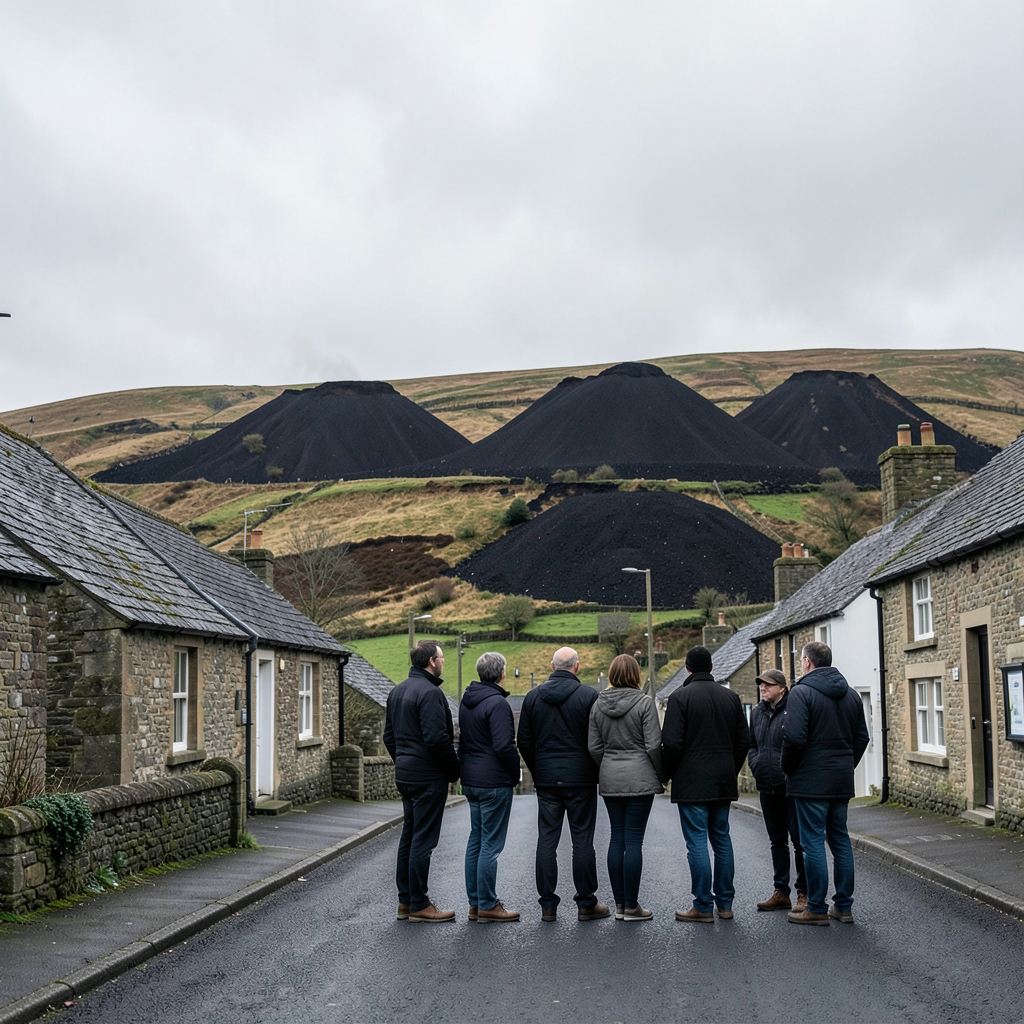

A documentary examining Aberfan’s ongoing battle following the 1966 tragedy is set to screen as Wales commemorates six decades since the catastrophe.
The production revisits the community’s campaign to eliminate the hazards that persisted above residential areas after the initial disaster concluded.
The narrative of Aberfan extended far beyond the conclusion of rescue efforts.
For those who survived and the families left grieving, subsequent years brought an additional struggle as a Welsh community confronted powerful establishment figures to safeguard generations to come.
This grassroots campaign constitutes the central theme of the programme led by a broadcaster originally from Ammanford.
Aberfan: The Village That Fought Back explores a frequently overlooked dimension of the tragedy, shifting focus from the morning’s catastrophic events when a colliery spoil tip surged down a mountainside and overwhelmed Pantglas Junior School along with neighbouring dwellings.
On October 21, 1966, a colliery spoil tip situated on elevated terrain above Aberfan, in proximity to Merthyr Tydfil, collapsed catastrophically.
The tip had been positioned atop a natural spring, and sustained rainfall caused moisture to accumulate within the mass, transforming it into a lethal slurry that descended the slope.
This catastrophe resulted in the deaths of 116 children and 28 adults.
Responsibility for the tip fell under the National Coal Board’s jurisdiction, and the subsequent official investigation apportioned fault to the organisation alongside nine individual employees.
The programme investigates how local inhabitants persistently demanded intervention in the period following the disaster, challenging the National Coal Board regarding hazards presented by tips still looming over the settlement and insisting their grievances receive proper consideration.
The programme is scheduled for broadcast on BBC One Wales with a network transmission on BBC Two.
S4C will simultaneously air a Welsh language version titled Alex Jones: Un Diwrnod yn Aberfan.
During production, the presenter returned to south Wales to gather testimony from individuals whose formative years were irrevocably shaped by the events.
In remarks published by Radio Times, she recounted interviewing survivors now in their late sixties and seventies, noting how they appeared to revisit the terror of their youth when discussing that morning.
She observed that these individuals, despite their current ages, seemed transported back to their schooldays when recounting the disaster, their expressions reflecting the profound fear they experienced as children.
As a mother of three herself, she reflected on how this experience affected her deeply, describing it as the most sorrowful thing she had ever witnessed, something that completely overwhelmed her.
Among those interviewed for the programme was Jeff Edwards, who was seven years old when he escaped the Pantglas Junior School collapse.
He holds the distinction of being the final child extracted alive from the destruction.
A photographic record of Edwards being carried from the wreckage as a young boy remains one of the most striking images connected with the disaster.
The presenter noted that this image, capturing a seven-year-old with fair hair being pulled from the debris, conveys countless stories of survival and loss.
His firsthand account contributes to the programme’s broader examination of lives permanently changed by the catastrophe and the tenacity of a community that persisted in demanding accountability and reform well beyond the point when international interest had dissipated.
As the sixtieth commemoration approaches on October 21, the documentary provides an occasion to honour not only those who perished in Aberfan but also the residents who continued pressing for transparency and remedial measures in subsequent years.