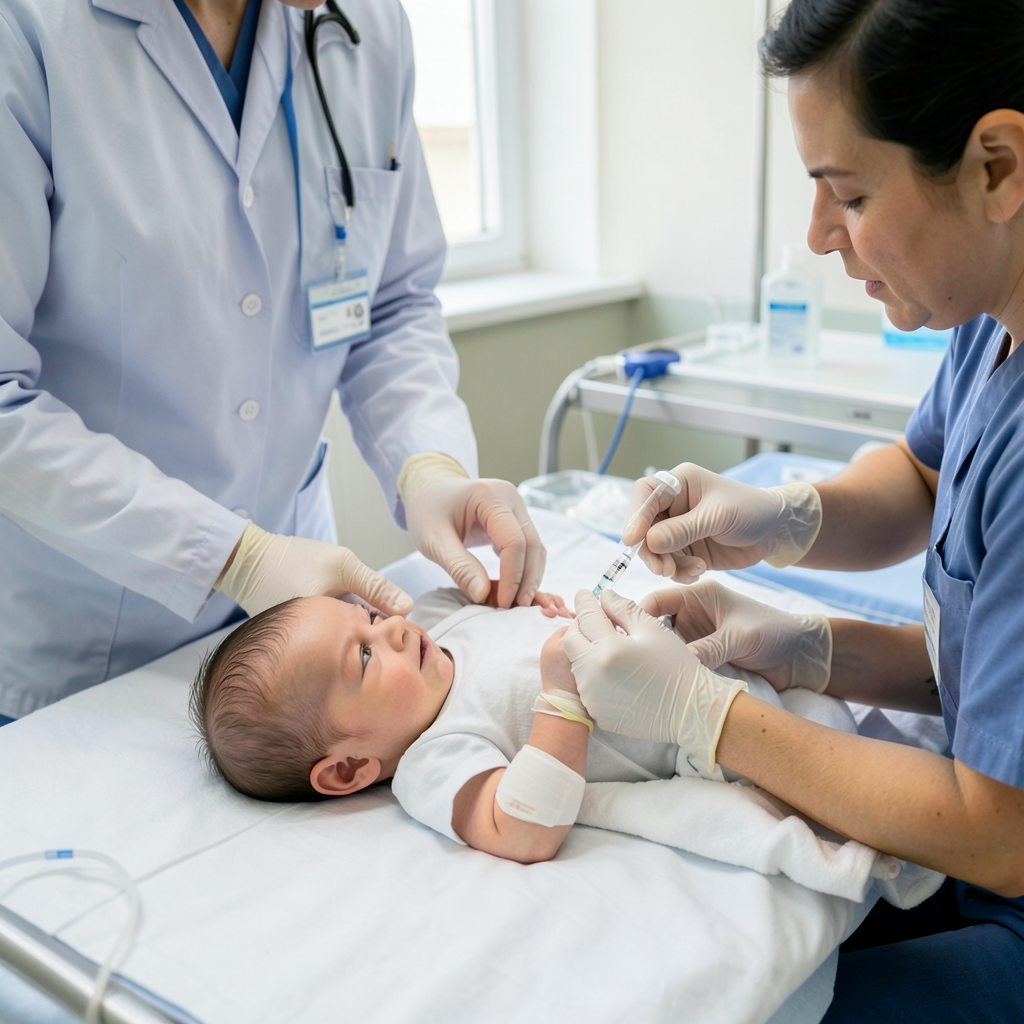

A UK Health Minister has stressed that any decisions regarding the nationwide introduction of newborn screening programmes across Wales require extremely careful consideration.
The screening process involves vital examinations carried out during the initial weeks following birth to identify uncommon but severe medical conditions. Detecting these illnesses promptly enables quick intervention and improved health results for infants.
Ruth Jones, the MP representing Newport West and Islwyn, questioned why England and Wales have not adopted the approach taken by Scotland and implemented the programme throughout the nations. The MP suggested that introducing such screening on a national basis could enhance the health and welfare of patients.
During a session in Westminster, Ms Jones put her concerns to Health Minister Sharon Hodgson. Additionally, she highlighted the circumstances of one of her constituents, Jesy Nelson, whose twin daughters received a diagnosis of Spinal Muscular Atrophy at birth.
Ms Jones expressed approval for the headway made in England regarding broader access to newborn screening, while acknowledging that current provision remains insufficient. She noted that approximately 72 percent of infants born in England undergo screening, yet emphasised that much more needs to be accomplished. She pointed out that the former Health Secretary, her colleague Wes Streeting who represents Ilford North, pledged to broaden the ISE to enable examination of additional children, and requested information from the Minister regarding implementation progress.
In her response, Ms Hodgson acknowledged that numerous families and campaigners believe the Government has been excessively hesitant in reaching a determination regarding SMA screening. She conveyed understanding of this exasperation while maintaining that choices pertaining to national screening initiatives demand substantial caution.
She explained that certainty must exist that screening produces greater benefits than drawbacks, can be implemented safely and equitably, and represents optimal deployment of NHS resources for those babies and families who rely upon them. Significant uncertainties persist, she noted, regarding both the advantages and logistical aspects of implementing SMA screening. This uncertainty carries weight, she added, because any conclusion reached must possess sufficient strength to underpin a sustainable national initiative.