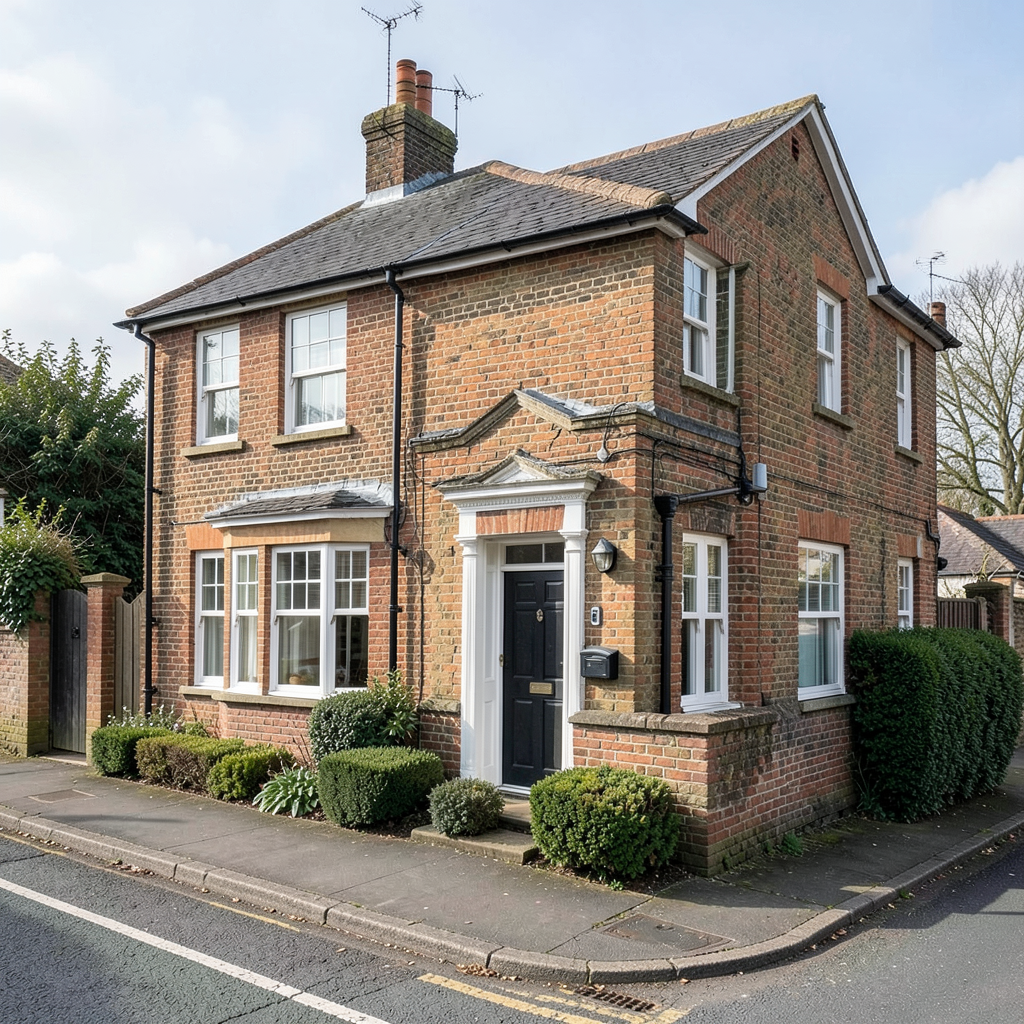

A Victorian-era property connected to the renowned designer of Portmeirion has received approval to operate as a holiday rental in a Gwynedd community, despite residents’ concerns about the lack of available housing for locals.
Drum House underwent modifications by Clough Williams-Ellis for Christabel Macnaghten, later Lady Aberconway, serving as her private seasonal residence.
The structure at Croesor, Llanfrothen dates from approximately 1864 and originally functioned as accommodation for workers at the nearby Croesor and Rhosydd slate quarries.
The proposal to transform the property into self-catering holiday accommodation drew significant protest from the local community.
However, members of the Eryri National Park planning committee voted unanimously on 14 October to approve the scheme.
The approved plans involve converting the traditional stone structure into a commercial holiday let operating under C6 Use classification as part of an agricultural enterprise, alongside the installation of photovoltaic panels and a replacement sewage system.
The application was submitted by Robert McLaren through representatives Smith and Brooke Architects.
Documentation from the National Park authority positioned the dwelling centrally within the Garreg Hylldrem agricultural holding, itself identified as one of three principal farms comprising the Brondanwg Estate.
Access to the property is restricted to a private track across which the applicant holds rights of way.
Constructed on elevated terrain with stone walls featuring buttresses and a slate covering, the building commands views of the coastline to the south and the Cnicht mountain above.
The structure is recorded in the Authority’s register of traditional buildings valued for maintaining their original architectural character and external characteristics, situated within the Grade II Listed Historic Park and Garden designation covering the upper portion of the Brondanw Estate at Parc, Croesor.
Architect Michael Brooke, representing the applicant, explained during the committee session that his client had inherited Drum House from a relative and faced considerable restrictions on its use.
The property falls outside standard planning use categories, meaning no permitted development rights apply.
Essential maintenance including structural repairs and window replacement would require an investment of approximately £200,000, yet without residential occupancy the owner could not proceed.
Brooke indicated the sole viable path forward involved securing planning consent for commercial holiday letting as an ancillary agricultural enterprise, which would generate income to fund preservation work.
He anticipated such an operation would contribute roughly £10,000 annually to the local economy through employment and direct expenditure of around £7,500 in neighbourhood shops.
The representative characterised the proposal as offering the most practical solution for safeguarding the structure’s future while delivering tangible benefits to the surrounding area.
A pre-application consultation regarding the holiday unit conversion had been lodged in January 2025.
Planning officers subsequently determined that for the scheme to align with adopted policy, it would need to demonstrate integration within an agricultural diversification initiative providing economic support to the existing farm business, a condition that did not appear to be satisfied in this instance.
Llanfrothen Community Council submitted objections, requesting that previous representations highlighting excessive holiday accommodation in the vicinity be taken into consideration.
The council further observed that substantial opposition had emerged within the community and expressed reservations about whether adequate financial justification or compliance with rural enterprise requirements had been demonstrated.
Six individual objections were received, with one correspondence identifying the proposal as adding to the proliferation of holiday rentals and suggesting the property would more appropriately serve as a permanent family home for a local household.
Another submission emphasised that permanent residents generate year-round economic activity through retail and service sector spending, while additional objectors highlighted that Croesor and Llanfrothen are experiencing acute shortages of affordable housing for local populations and expressed concern regarding impacts on the Welsh-speaking community.
Cadw, the historic environment service, offered no objection, noting that permitting commercial use would facilitate necessary restoration works and guarantee the building remained properly maintained going forward.
During the committee proceedings, Councillor John Pughe Roberts observed that any modifications should respect the property’s historical significance.
He expressed support for the application, warning that refusal could result in the building’s eventual loss.