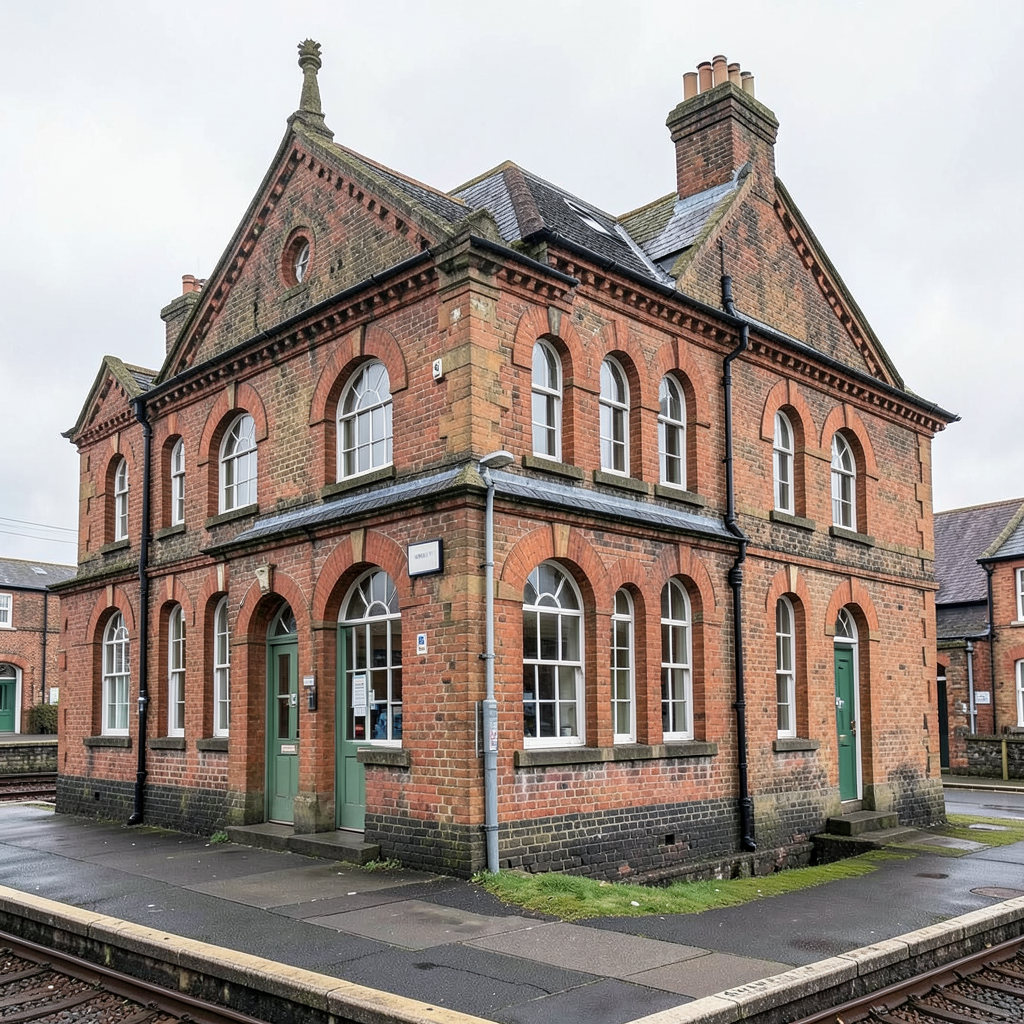

A £33 million scheme to construct a modern transport interchange in Caerphilly has drawn criticism from local representatives and community members opposed to the proposed demolition of the town’s Victorian railway ticket office.
The structure, which dates from 1913 and is 111 years old, is among the final surviving buildings from that period in the borough, alongside Caerphilly Castle, a historic chapel, and the former courthouse.
Caerphilly County Borough Council and Transport for Wales are jointly advancing the initiative, which envisions replacing the current separate railway and bus station facilities with a combined two-storey facility featuring glass, stone, and metal construction.
According to documentation submitted by council planning officials, the existing ticket office and its associated bridge suffer from structural deterioration and fail to comply with contemporary requirements for accessibility, safety, and environmental performance.
Plaid Cymru Senedd Member Lindsay Whittle has emerged as a vocal critic of the demolition proposal.
The representative for the Blaenau Gwent, Caerphilly, and Rhymni region held discussions with Deputy Transport Minister Mark Hooper, during which illustrations prepared by a local resident demonstrating how the Victorian structure could be incorporated into the new development were presented.
Whittle expressed cautious optimism following the meeting, noting that the minister had engaged with arguments for preserving the building.
However, the politician emphasised that decisions regarding the project extend beyond the Welsh Government, involving Transport for Wales and the local authority, which has already submitted a formal planning application.
Whittle indicated hope that modifications could still be introduced at this stage, suggesting that the original structure and the new interchange could coexist within the development.
The Senedd Member drew attention to the rarity of such structures in Caerphilly, observing that numerous other historically significant properties have already been lost to redevelopment.
Buildings no longer standing include a school constructed in the late 1800s, the former police station, several historic banking institutions, a cobbler’s workshop originating from the 1700s, and the former Clive Hotel.
Whittle characterised the ticket office as representing one of the final surviving examples of century-old architecture in the town, with only Caerphilly Castle, the chapel, and the old courthouse remaining from that era.