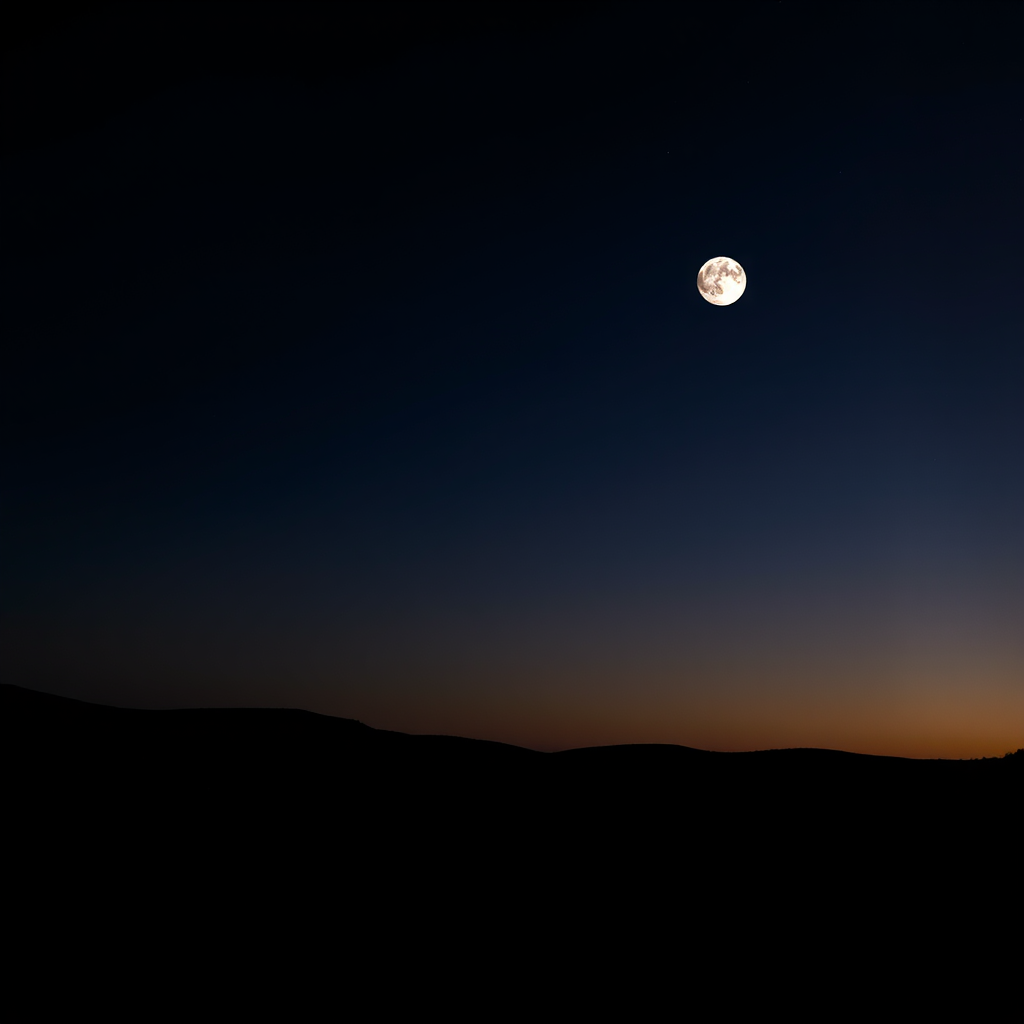

The lunar body this weekend sits just one day beyond its full stage, while Venus, nicknamed the evening star, persists in shining prominently in the western heavens following sunset.
Throughout April, Venus has been impossible to miss in the night sky, and as May begins, it continues to hold its remarkable position. The planet glows so intensely for two reasons: its proximity to our planet, and the thick cloud layer enveloping it, which reflects sunlight back toward us with exceptional efficiency. After spotting Venus, sweeping your gaze upward should bring Jupiter into view, also visible during the evening twilight, though somewhat less luminous than Venus.
This month presents a noteworthy occurrence as the separation between Venus and Jupiter visibly decreases. Since both worlds follow the same orbital path known as the ecliptic, May sees Jupiter advancing toward the Sun while Venus moves away from it. From our vantage point, this results in the two planets appearing to drift nearer to one another. In fact, during the early part of June, they will appear remarkably close together.
May also features not one but two complete lunar bodies, with the first having taken place on Friday, May 1, and the second scheduled for Sunday, May 31. Consequently, the year 2026 will contain 13 full Moons instead of the usual 12, and because this particular month contains two complete Moons, we have the expression once in a blue Moon, signifying something uncommon.
But why the blue colour? When Krakatoa erupted in Indonesia in 1883, the massive cloud of dust and particles flung into the atmosphere produced not only strikingly coloured sunsets but also changed how the Moon appeared, giving it a blue tint. This unusual phenomenon may well have given rise to the saying.
The reason for the pair of full Moons lies in the lunar cycle, which measures how long the Moon takes to complete all its phases, compared to our calendar system. These two measurements do not align perfectly, meaning that sometimes two full Moons appear in the same month. So while the first full Moon of May is called the Flower Moon, referencing the blooming colours of spring, the second full Moon of the month becomes the blue Moon.
Additionally, while much attention has been given in previous years to the appearance of a supermoon, this first May full Moon is actually a micromoon, meaning it reaches its greatest distance from Earth, whereas a supermoon occurs when it is at its nearest point. Looking toward the eastern horizon, observers can watch the Flower Moon ascend and travel toward the southeast.
International Space Station, ISS: Once more, the ISS will be observable, though only during the late night or very early morning hours. Monday, May 4: emerges from the west at 4.38am, disappears in the southeast at 4.45am. Wednesday, May 6: emerges from the west at 4.40am, disappears in the southeast at 4.46am.
Readers are invited to submit their astrophotography images to: thenightsky@themoon.co.uk