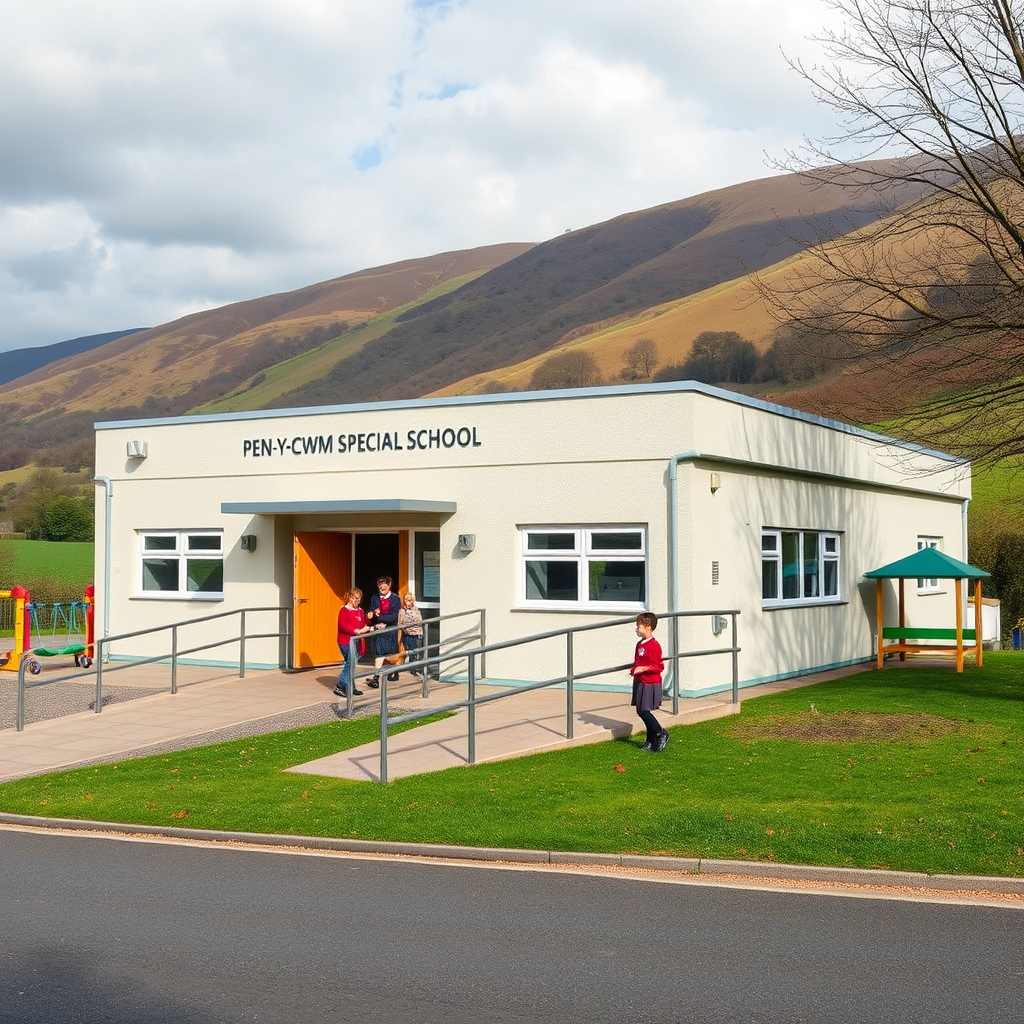

Plans for a much-needed boost in student places at a special school in Blaenau Gwent look set to receive final approval from senior politicians.
Pen-y-Cwm provides education for pupils aged three to 19 with various disabilities and challenges, including severe learning difficulties, profound and multiple learning difficulties, autistic spectrum disorder, and those with visual or hearing impairments.
At an extraordinary gathering of Blaenau Gwent County Borough Council’s Labour Cabinet on Thursday, April 30, senior councillors will examine two choices regarding the plan to expand places at the school following the mandatory objections period.
They will either proceed with the scheme and officially approve it, or dismiss it.
The Cabinet had previously sanctioned the expansion at a February session, enabling the process to move forward to a four-week objections period running from February 26 through March 26.
This followed a public engagement exercise conducted between December 8 and January 18, during which 87.5 per cent of participants — 112 of 128 — expressed backing for the scheme.
The statutory notice and objections period gave anyone the chance to raise concerns about the school organisation proposal.
According to the document, the Welsh Government School Organisation Code requires that an objections report, summarising any statutory objections, must then be published alongside the proposer’s response to those objections.
It was noted that throughout the statutory notice period, no formal objections were submitted.
Under the code’s requirements, the council must officially publish the decision notification within a week of the determination being made.
Notifications will be distributed to those consulted, concluding the legal procedure.
After the decision, implementation of the scheme would be overseen through existing education and council governance systems, including student number planning, financial monitoring, and capital programme oversight where relevant.
If approved, the expansion would occur across two phases.
From September the following year, the school could accommodate 205 students, increasing from the present ceiling of 175.
By 2029/30, capacity would rise further to 250 students.
Since relocating to new premises in 2012, enrollment at the school has grown by 30 per cent.