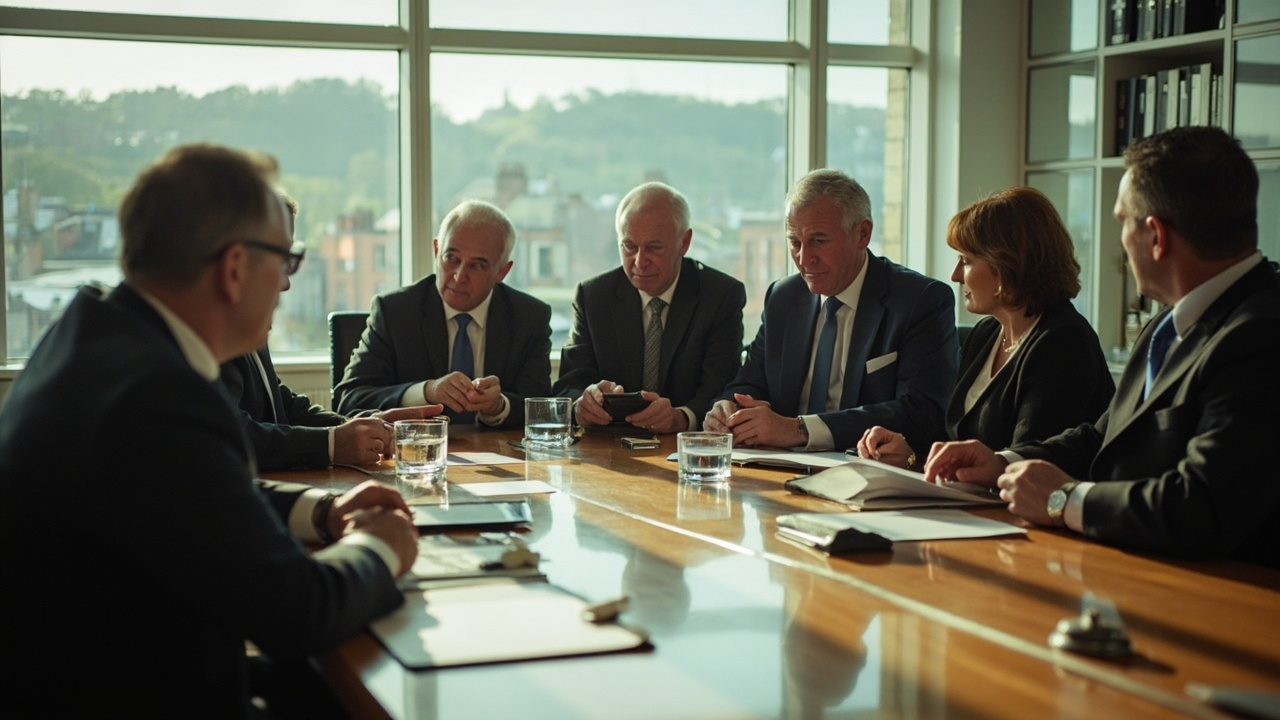

At a Blaenau Gwent County Borough Council Governance and Audit committee gathering on Monday April 20, members and independent lay representatives received details from Steve Vickers regarding the progress of federating Blaenau Gwent and Torfaen authorities.
Mr Vickers, who serves as joint chief executive for both councils, explained that senior staffing duplication at management level had been cut by 47 percent. He advised that a thorough examination of leadership frameworks spanning tiers one through four had been carried out, helping to define responsibilities, stabilise operations, enhance oversight and strengthen accountability. According to Mr Vickers, this work stands approximately 80 percent complete.
He added that elected members had approved a unified remuneration framework to support shared positions, with lower tiers across both organisations also being harmonised.
Councillor Haydn Trollope of the Labour group representing Tredegar stated that collaboration occurs wherever feasible as a federation, though all decisions prioritise what serves Blaenau Gwent and its residents best. He sought confirmation this remained the case.
Mr Vickers responded that representatives from both authorities had emphasised that maintaining separate political and financial control remained crucial. He noted members bear responsibility to their electorate and are committed to fulfilling that duty effectively, describing this as a consistent stance.
Mr Vickers explained federation involves cooperation where it proves beneficial, with councillors having been unambiguous that they represent their local communities and this principle warrants reinforcement.
Independent member Martin Veale inquired about potential financial benefits from the federated model. Mr Vickers outlined that executive team functions had been trimmed by 47 percent, representing substantial efficiency gains, though not all would translate directly into monetary savings as circumstances had not required it. Instead, this consolidation assists with budgetary balance and directs resources toward maintaining service delivery.
Mr Vickers continued that where advantageous, services had been integrated, resulting in combined leadership for adult social services and communities, as well as shared heads for economy, place, neighbourhoods and environment. This approach filters through the organisations via increasingly joint appointments, channelling resources toward frontline delivery.
However, certain departments were intentionally maintained apart. Mr Vickers noted both councils experienced vulnerabilities in education and children’s social services, making it sounder and more cautious to keep these divisions separate. He indicated this arrangement would persist for the foreseeable future while those areas continue stabilising and their frameworks remain intact.
Committee chairwoman and independent lay member Cheryl Hucker expressed appreciation for the informative briefing and requested the presentation slides be distributed to committee members.
In July 2024, Torfaen consented to share chief executive Stephen Vickers with Blaenau Gwent on a trial basis. By January 2025, councillors determined the arrangement was proceeding successfully and sanctioned proposals for enhanced collaborative working across both workforces.
Mr Vickers has subsequently been developing a restructured senior management framework across both authorities. Last May, Blaenau Gwent reorganised its cabinet portfolios and scrutiny committee arrangements to correspond with senior council staff duties across the two organisations.